Osso
São Gregório, Portugal
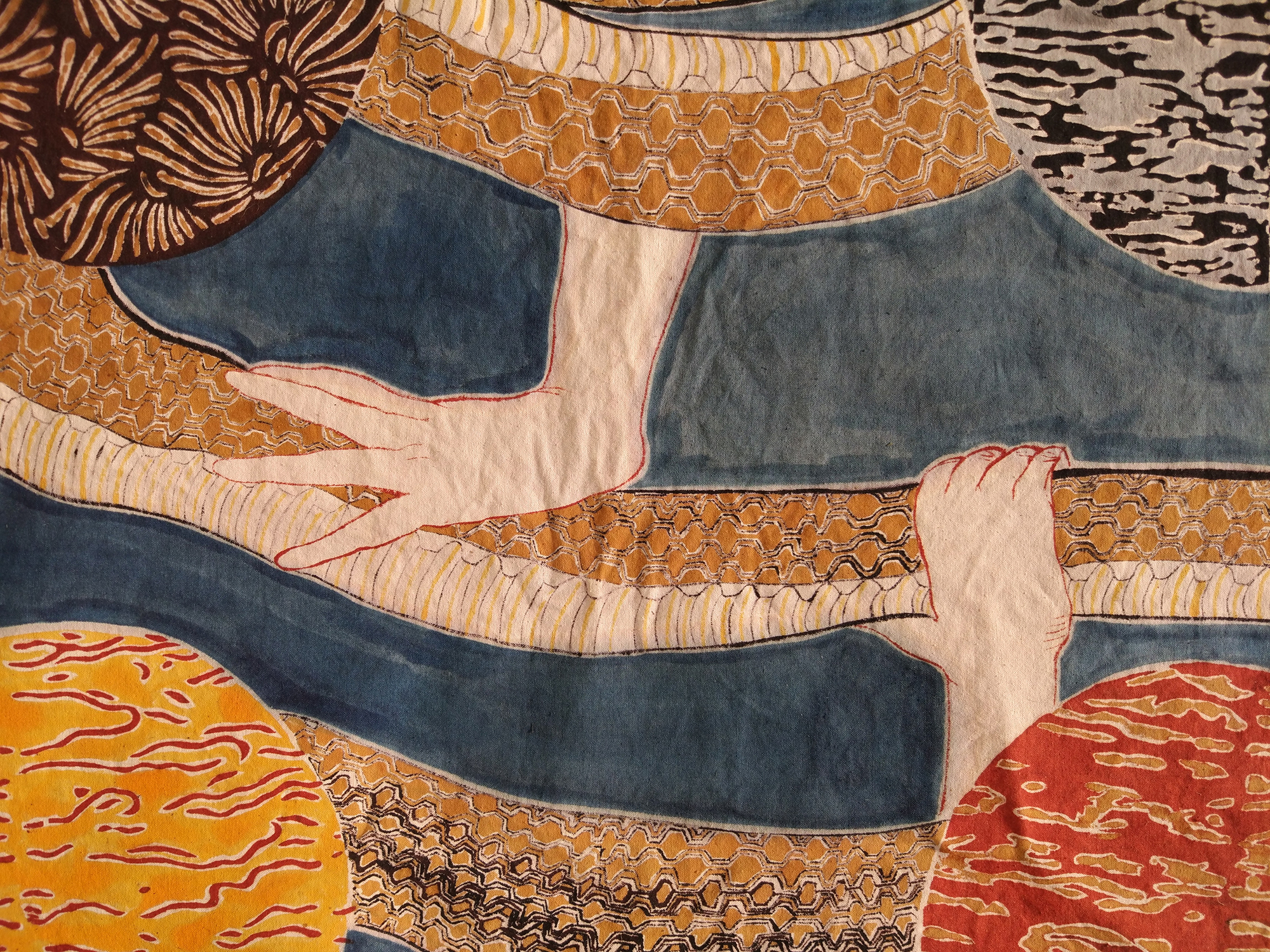
I was invited by Osso, a cultural association located in São Gregório, near Caldas da Raínha, to take part in the Macro-Residency with my colleague-artists Rita Thomaz and Sara Mealha. It was June 2023. We researched local plants, their dyeing properties. An herbarium was compiled like a family album. In the end we got a palette made of dyed cloths. These were ways of drawing a map of affections by interacting with the surrounding flora, using color as the main vehicle. I would like to thank Esperança Alves, a local farmer, for her help in identifying the plant species.
( Media )
Osso

Harvesting
The first week was dedicated to identify and collect potentially coloring species in the surrounding area.

Species_Names
As for the local plants, we dyed with dyer’s madder (Rubia peregrina tinctoria), its twigs, leaves and root; herb-Robert (Geranium robertianum), oak-galls (Ranunculus muricatus), dooryard dock (Rumex longifolius), rough-fruited buttercup (Ranunculus muricatus), loquat leaves (Eriobotrya japonica), mulberry leaves (Morus nigra), fig leaves (Ficus carica), yellow fleabane (Dittrichia viscosa), araucaria leaves (Araucaria angustifolia), corn marigold (Coleostephus myconis), green walnut shell (Juglans regia), plum tree leaves (Prunus domestica), eucalyptus leaves and nuts (Eucalyptus globulus), nasturtium flowers (Tropaeolum majus), onion husks (Allium cepa) and avocado pits (Persea americana), the latter two as kitchen scraps.

Dyer’s Madder Root
After many try and errors we have reached the conclusion that dyer’s madder root is by far the best colorant species in the surroundings. This is not new at all, since Rubia tinctorum was well known and commonly used by dyers throughout Antiquity, from India to ancient Greece. However, seeing the color appear with such intensity from its source – the roots – is an experience that opens up my awareness of the surrounding landscape.

Pigments
How to obtain pigments from the dyes.

Open Day (I)
Open day at Osso. The palette of natural dyes. Herbarium and pigments.

Open Day (II)
In the dyeing process there is a fundamental element without which it is impossible to observe the permanence of colors in vegetable-based fibers, it is the mordant. This term comes from the Latin mordens, which means ‘to bite’ or ‘to bind’. The mordent is the mineral or vegetable substance that allows vegetable fibers to be positively charged, attracting the subsequent coloring matter via a boiling bath, fixing it to its internal molecular structure. The five mordant baths used in this process were: (1) soya milk (cold bath), (2) oak chips (boiling bath) and alum (boiling bath) and alum, (3) eucalyptus bark (boiling bath) and alum, (4) Terminalia chebula (cold bath) and alum, (5) alum and sodium carbonate.
Three Sisters
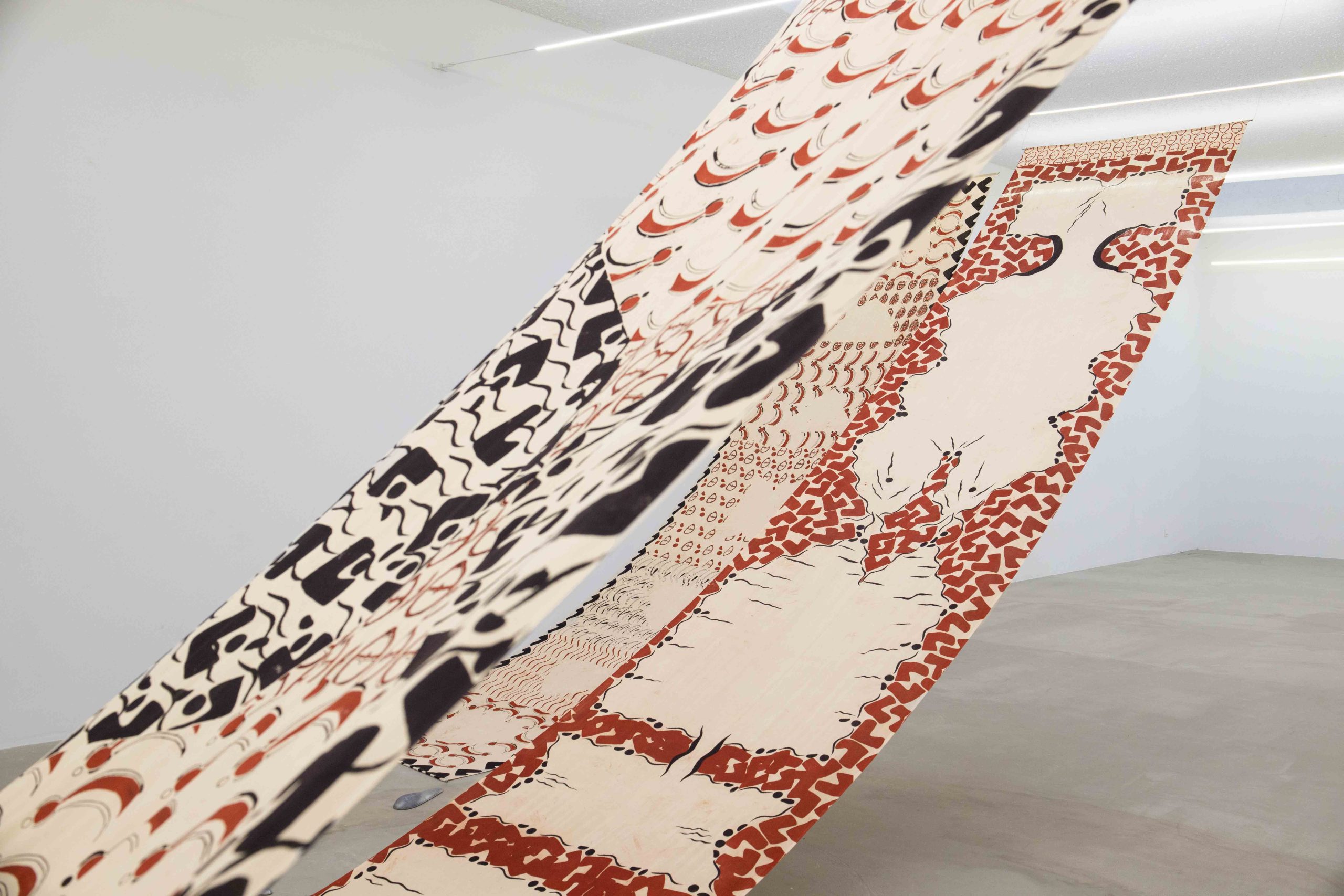
Sismógrafo, O’Porto
A Multiplicação dos Fingidos
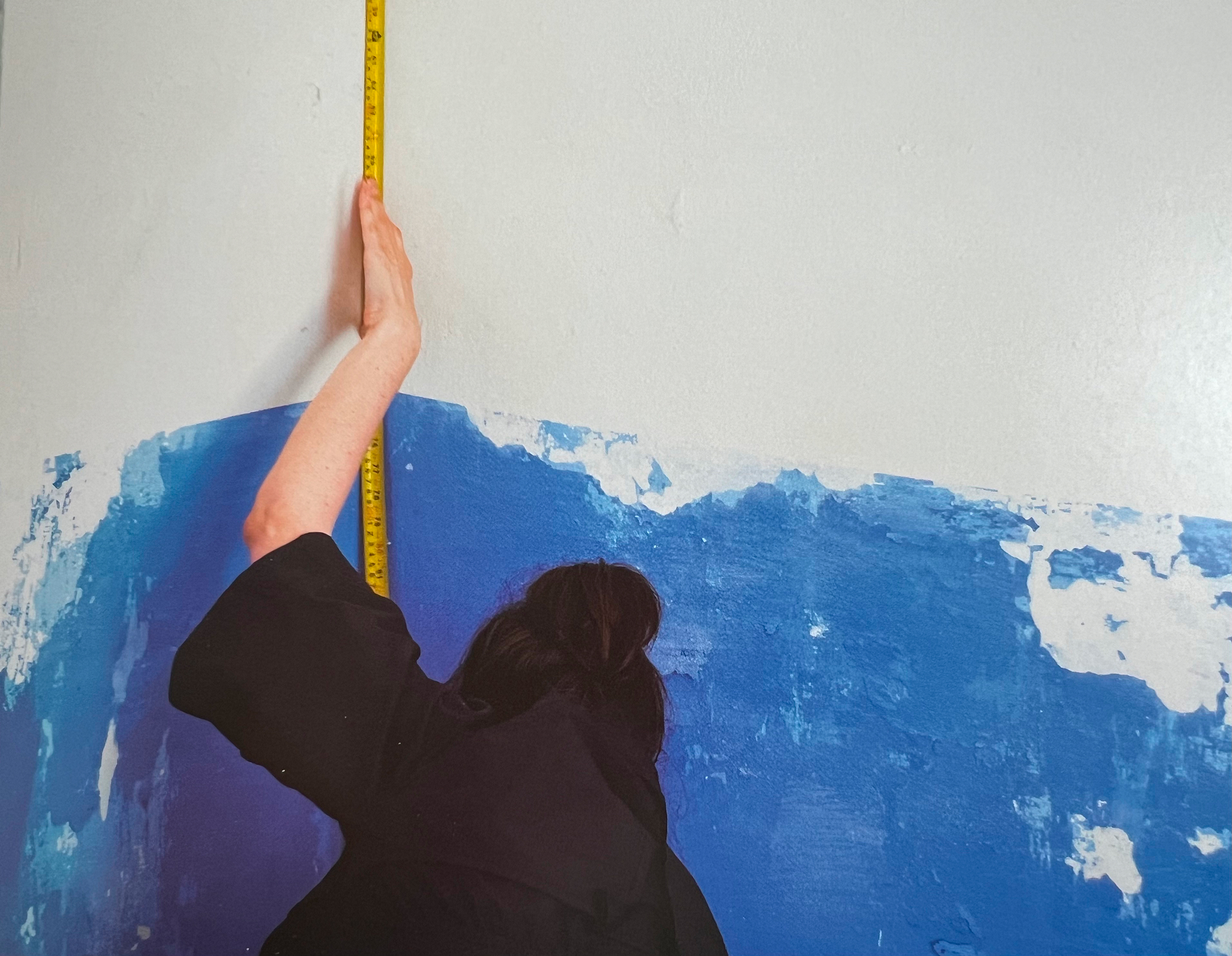
Land Art Cascais
The Sequel
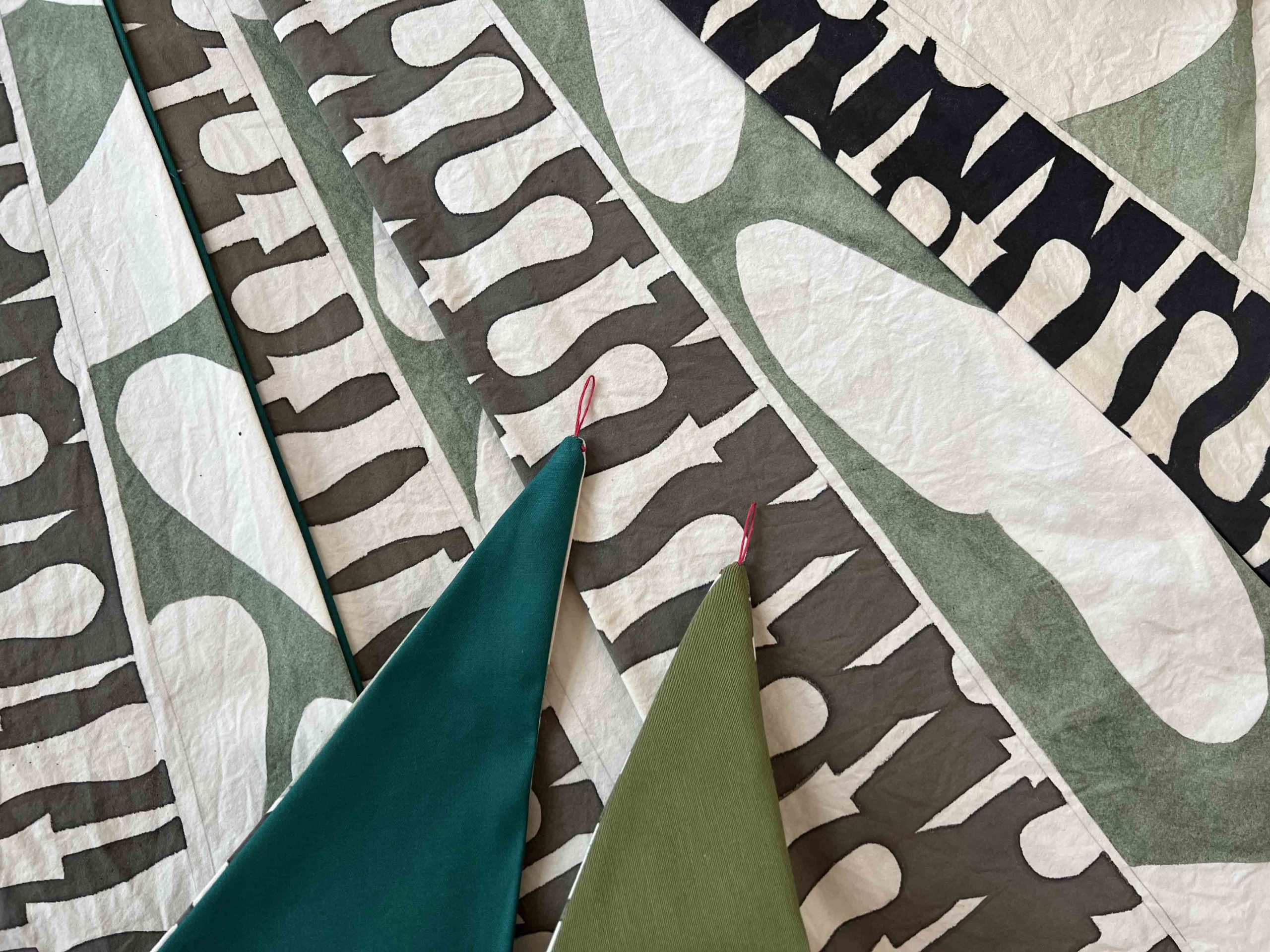
MNAC, Lisbon
Selva
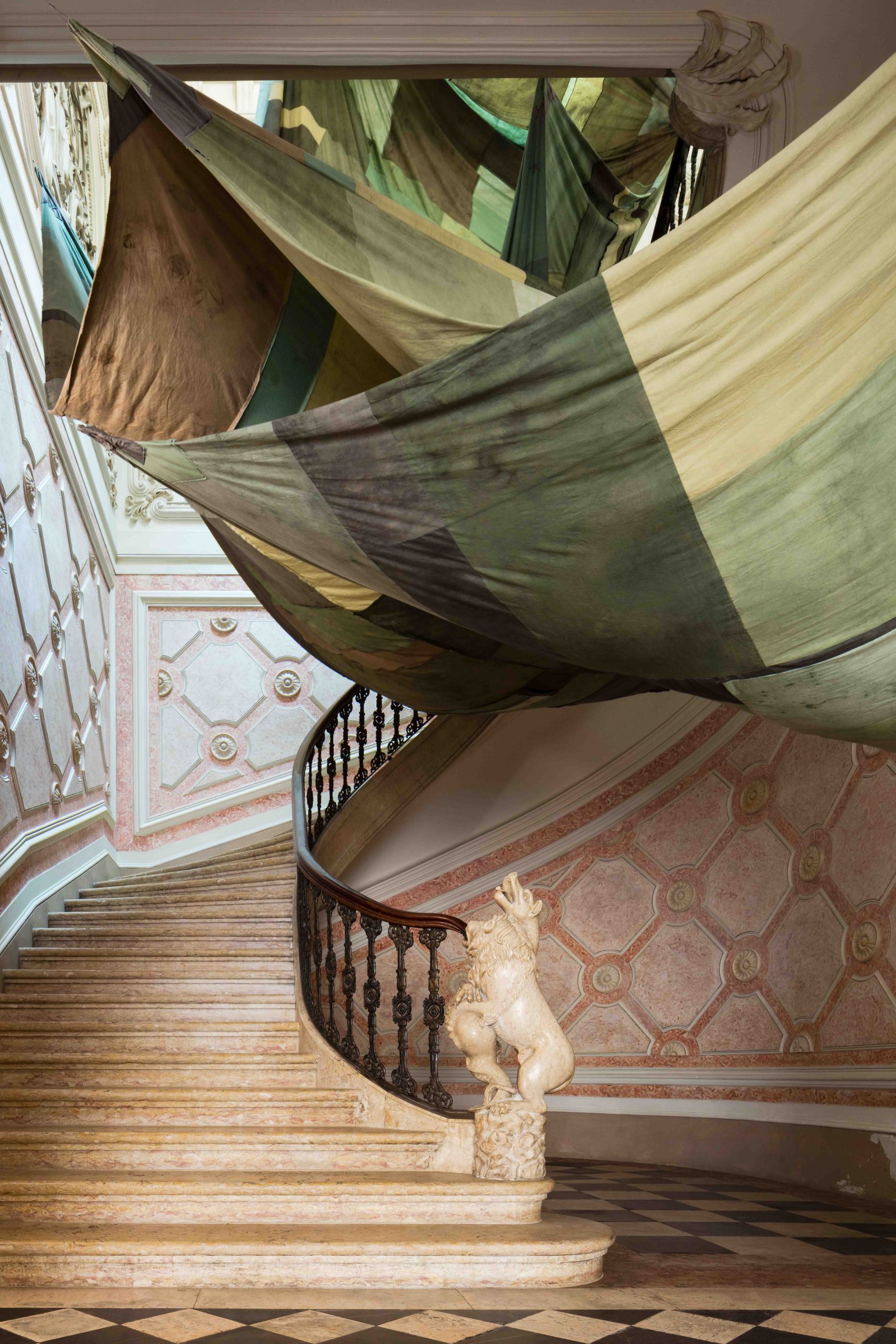
Brotéria, Lisbon
Ninguém. Só eu
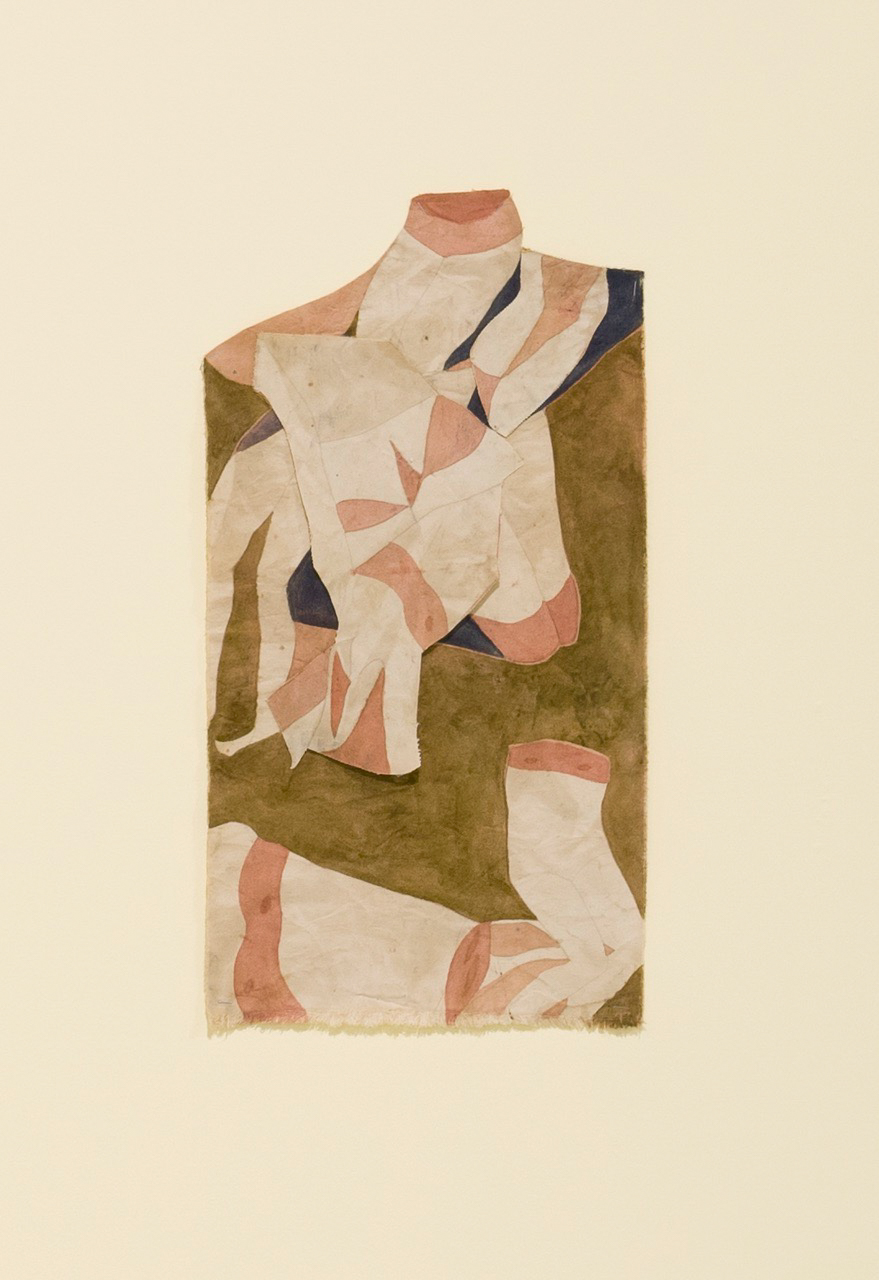
Centro de Arte Oliva, São João da Madeira
Plano de Contingência
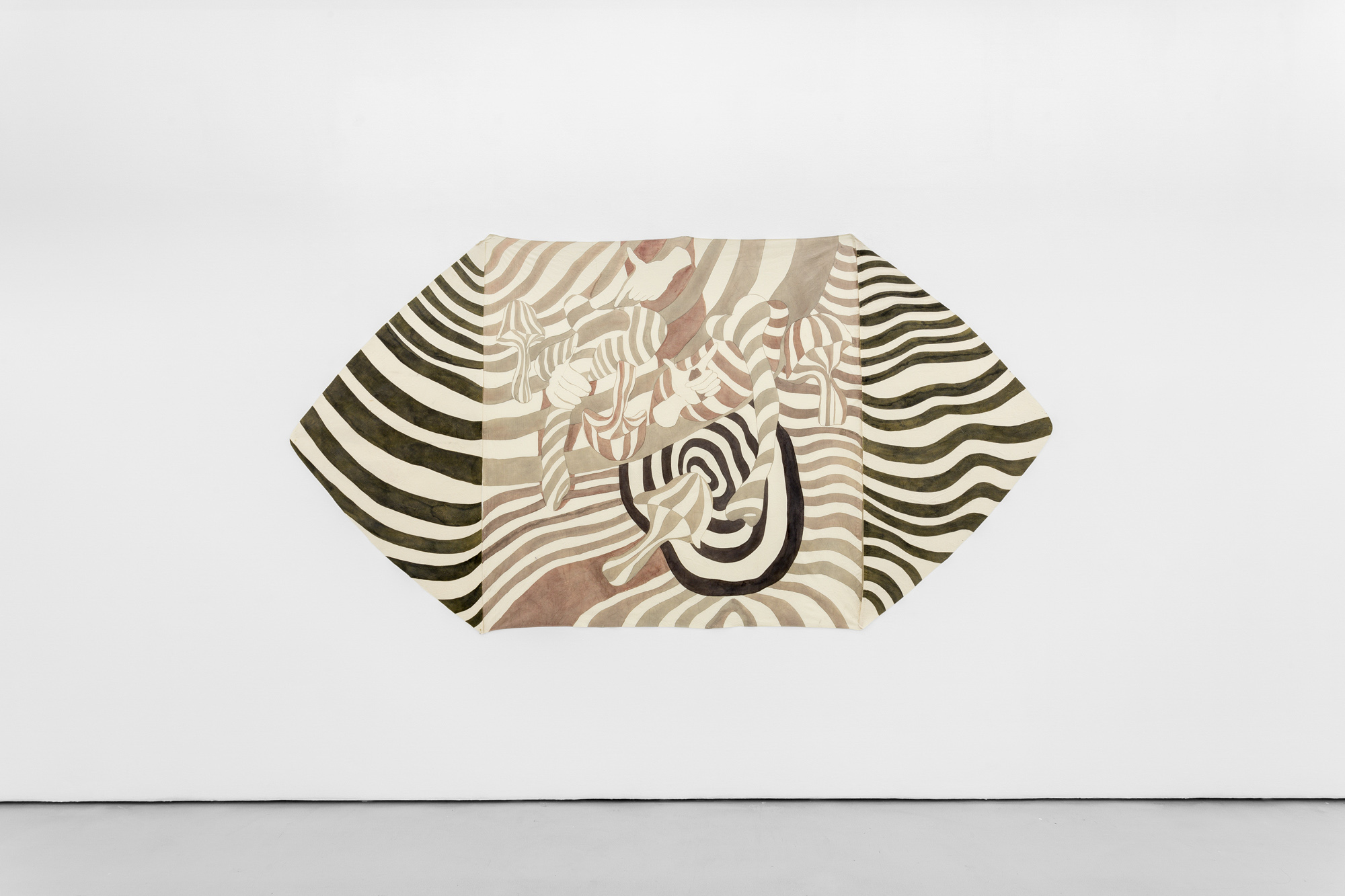
Cristina Guerra, Lisbon
Às Nonas, Midas nos Dedos Medram e Mondam
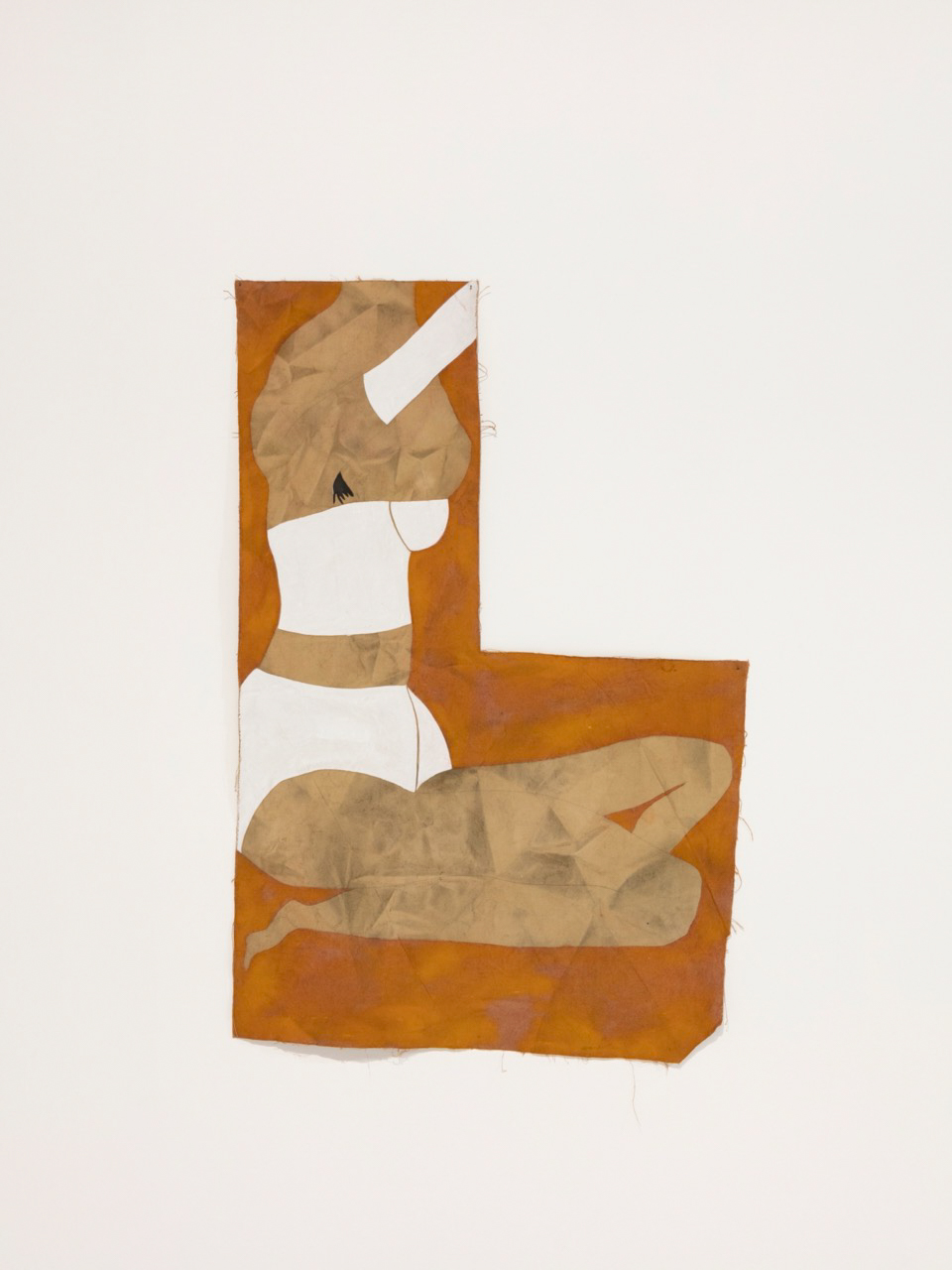
GALERIA DE ARTE DA CÂMARA MUNICIPAL DE ALMADA
Piquenique
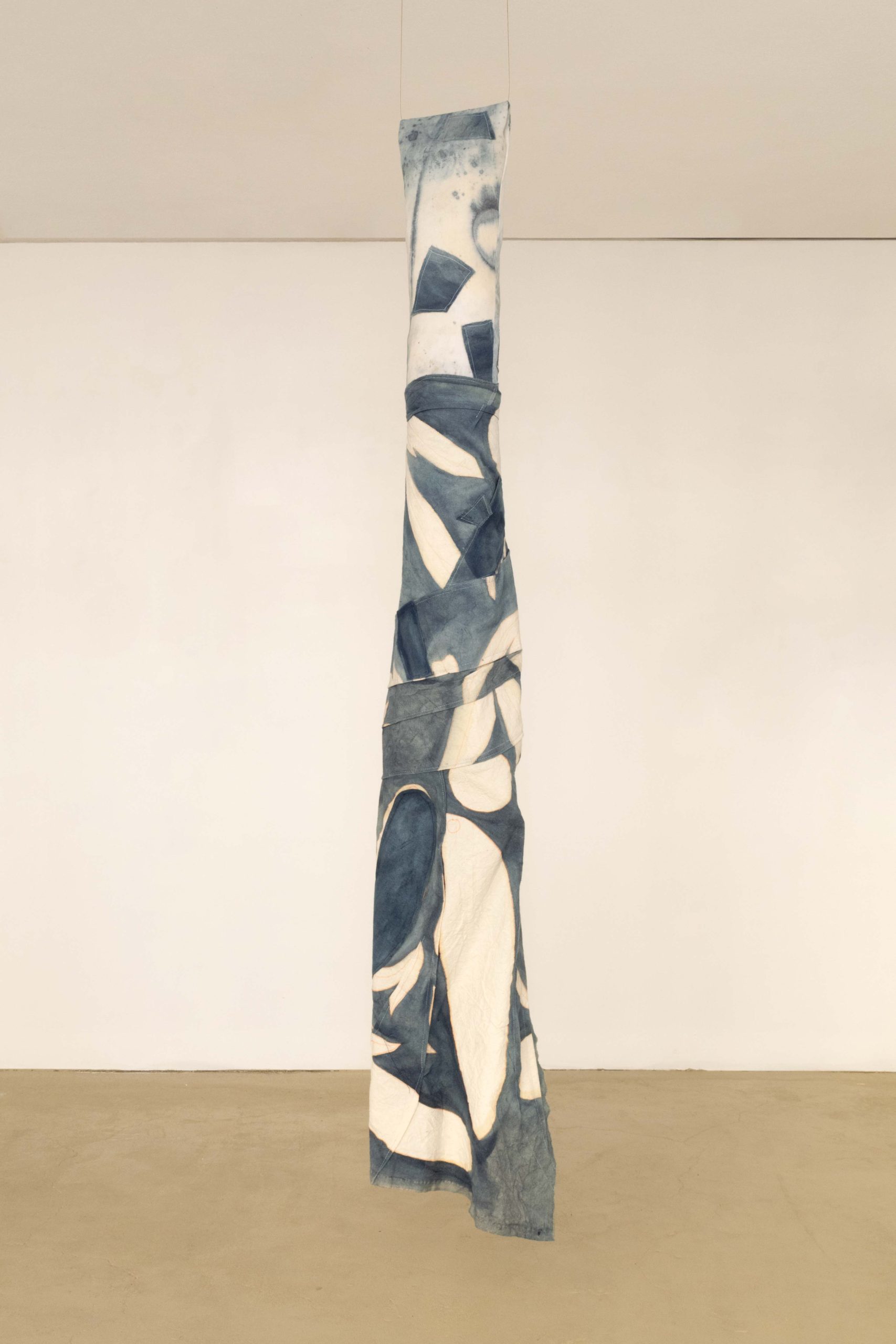
Verão, a project space run by Antonia Gaeta, Lisbon
Navigator
Chiado8, Lisbon