Mata ni Pachedi
Ahmadebad, India
THE KALAMKARI MATA NI PACHEDI
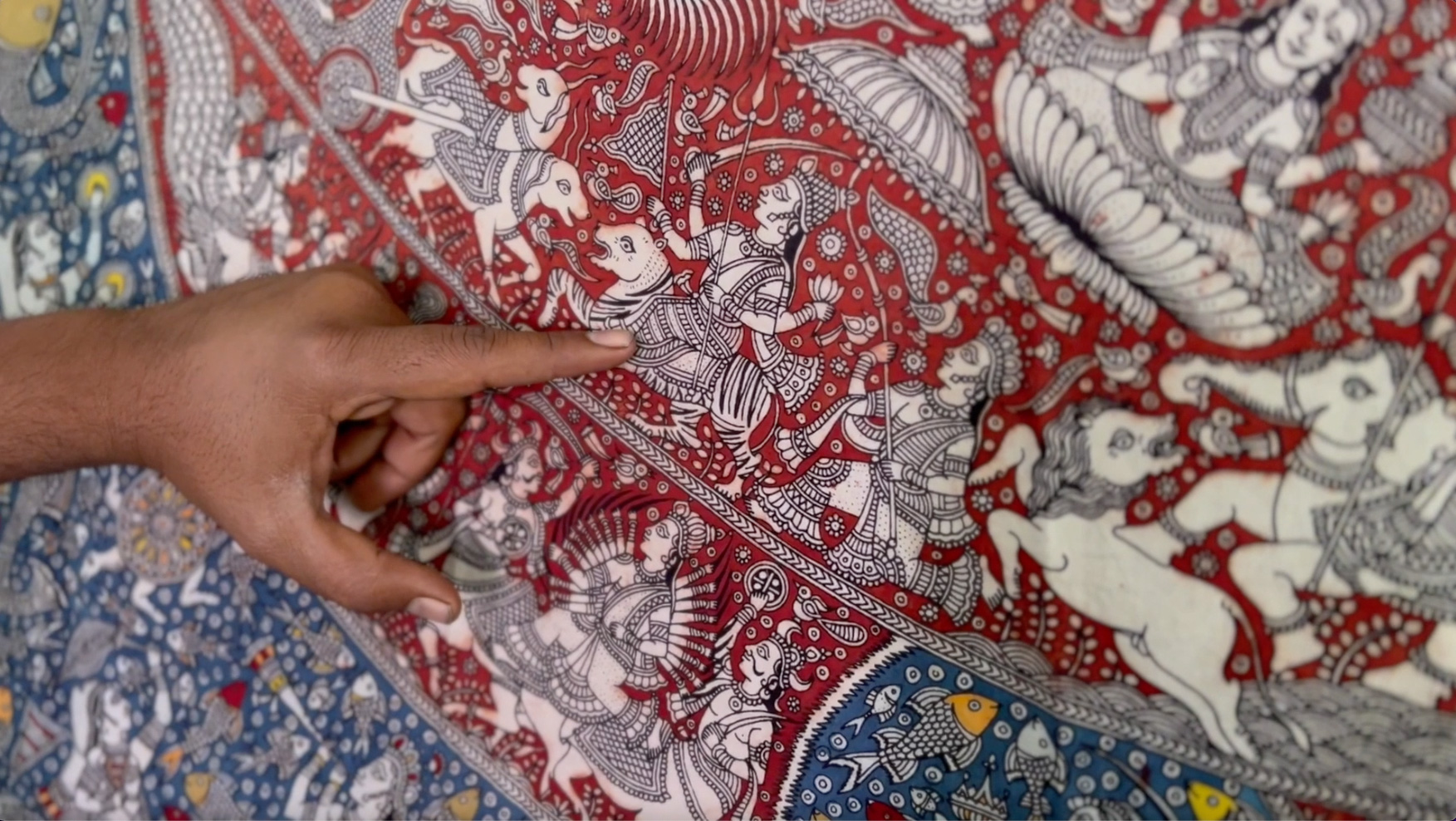
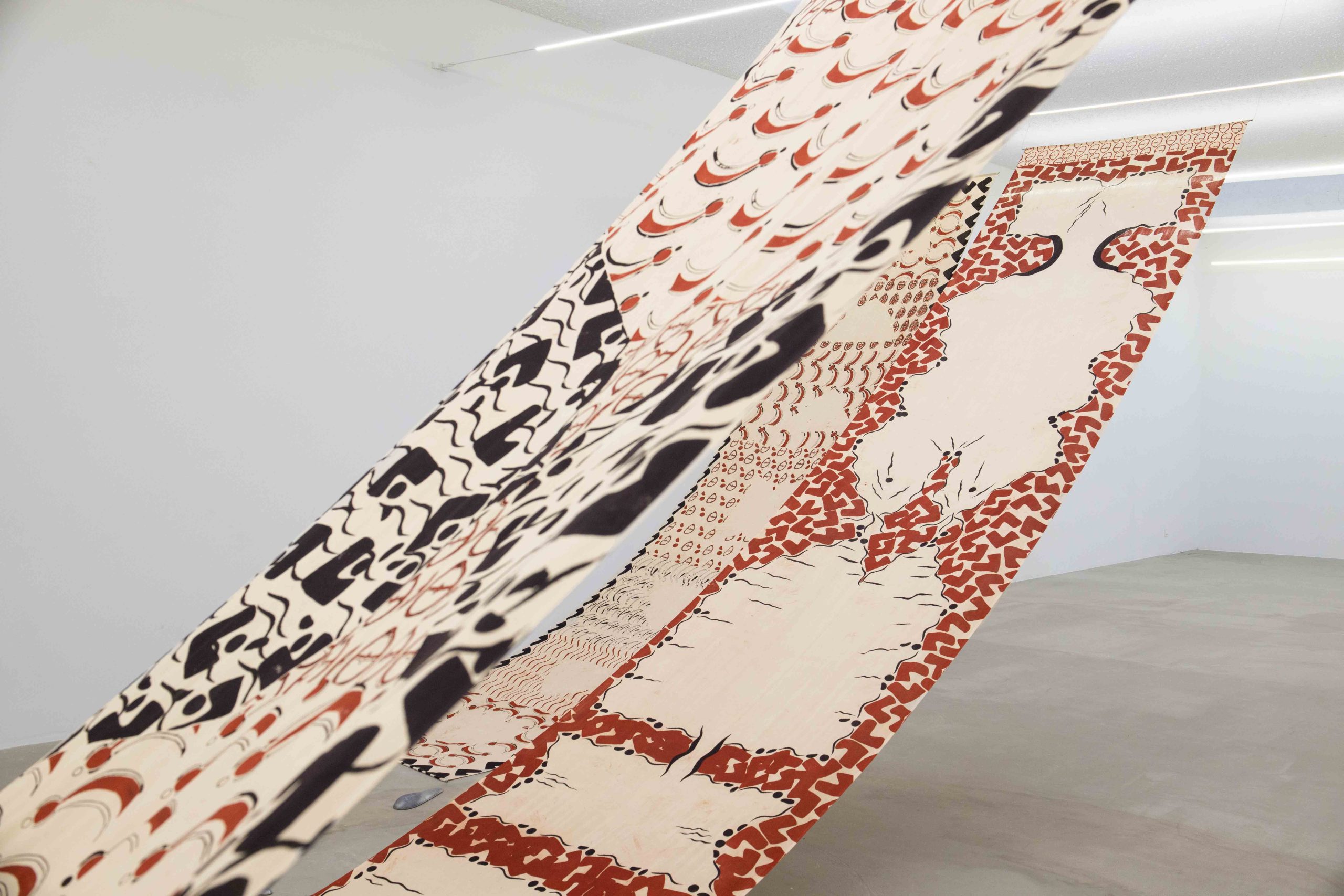
The Mata ni Pachedi are a community descending from the Vaghri, located in few villages in Gujarat. In Ahmadebad I met one of the Chitara families. They are Chandarvo painters. Working in small workshops, they make the dyes, the printing, the painting and the kalamkari work. Kalamkari, a Persian-based word, literally means pen-work. In their chandarvos, which can reach large sizes, fluidly demarcating the space of their temporary temples, the goddesses of Gujarat (derivations of Durga, I was told) are depicted in black, red, earth and yellow – all-natural dyes thickened by the tamarind seeds powder. Mata ni Pachedi means “behind the mother Goddess”.
( Media )
Mata ni Pachedi
Kirit’s Chandarvo
Kirit Chitara, is the eldest son of Jayanti Bhai Chitara and Kokila Ben Chitara. He is in charge of continuing the thread of knowledge kept throughout eight generations by his family and community. Kirit completed a degree in Textile Design at the Sajhanad College. He maintains the artisanal heritage one the one hand, while he reinvents traditional themes through novel graphic composition.
Harda Jayanti Bhai Chitara
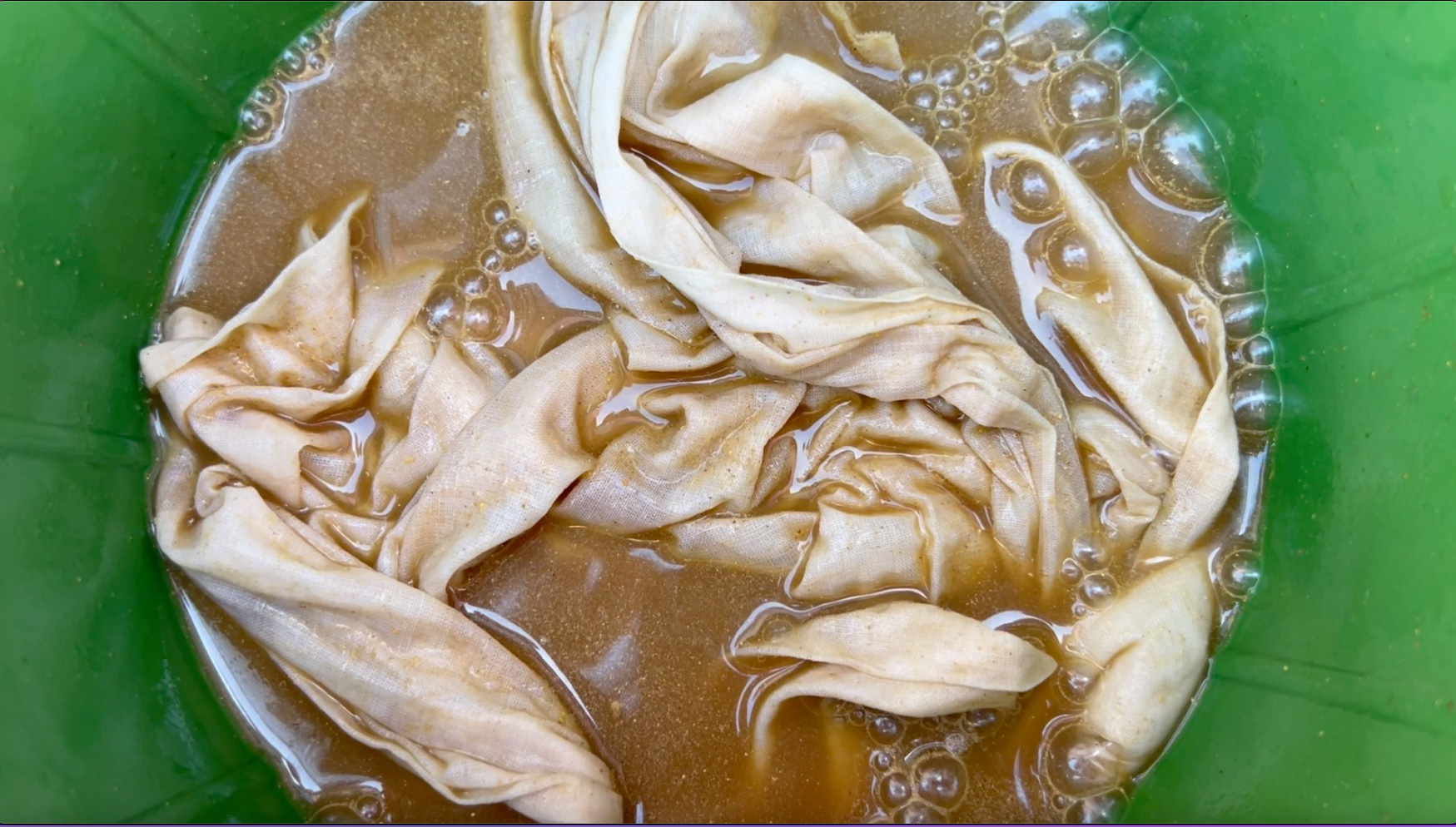
Jayanti Bhai mordating the fabric by dissolving harda powder (Terminalia chebula) in lukewarm water and soaking the fabric in the solution for about twenty minutes. The fabric is put to dry in the sun for about three days, as the sun light acts as a fixing agent together with harda, allowing the fibers to receive and fixate other vegetable and mineral dyes.
Black Dye
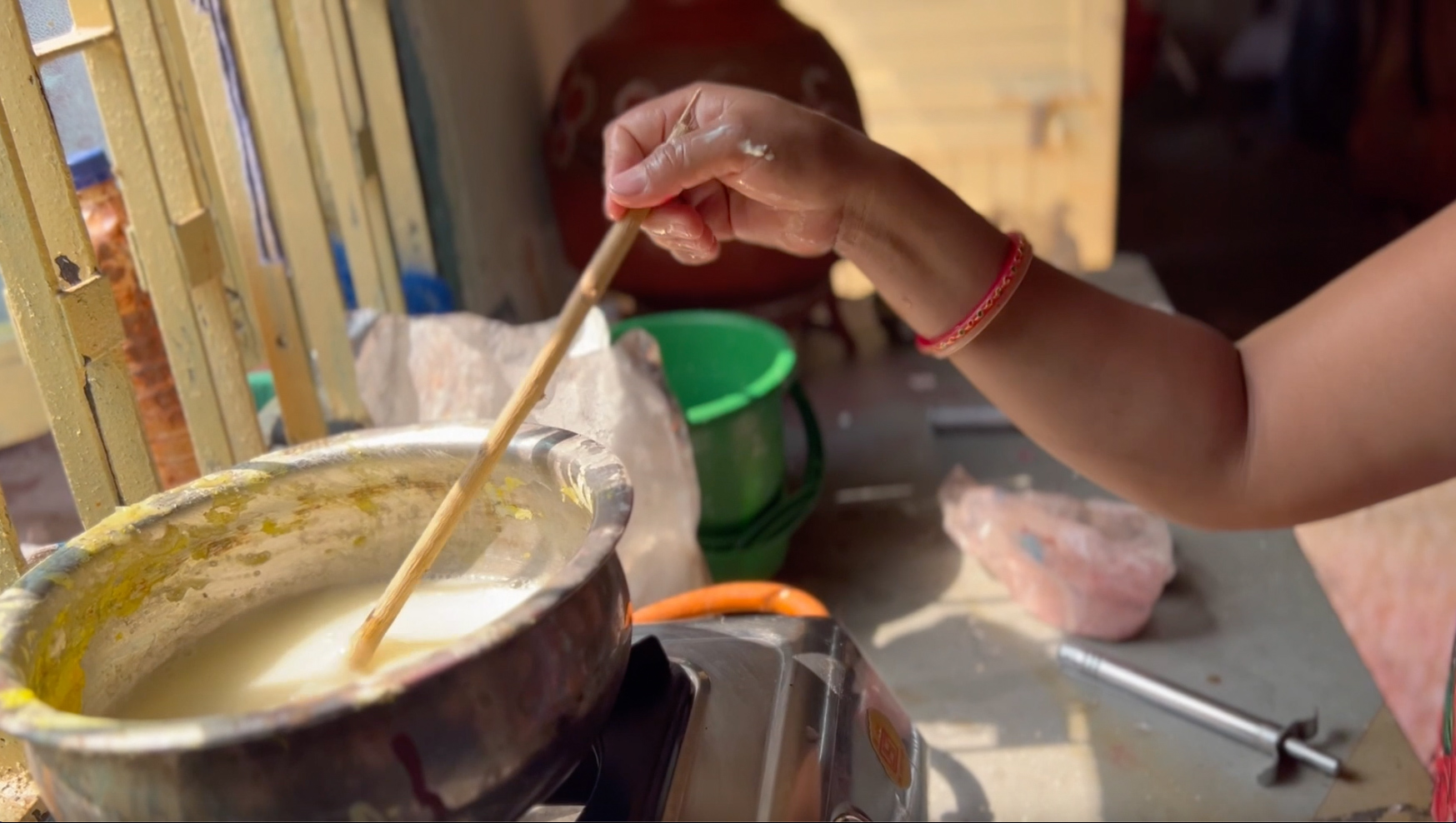
Jayanti Bhai preparing black mineral paint from iron acetate. Iron acetate is ob- tained by oxidizing iron scraps in a solution made with water, jaggery and vinegar.
Alum Red Dye
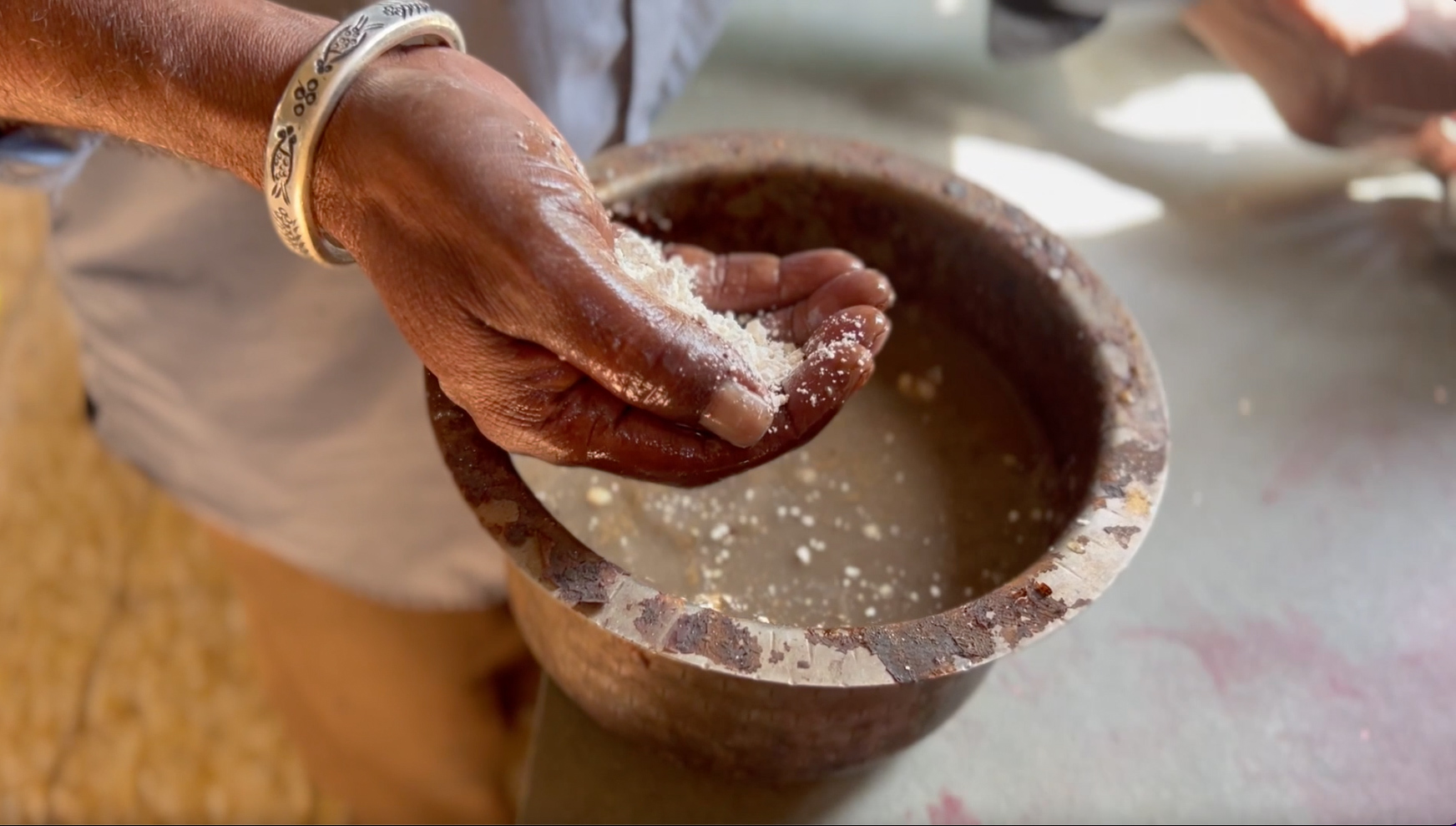
Kirit and Usa preparing red mineral paint from alum. Firstly, crushing alum rock with a hammer into powder, then collecting the powder into a boiling water pot to be simmered for one hour.

Tools
Jayanti Bhai makes a brush, crushing the fibers of a wooden stick while Kajal makes a qalam, sharpening the wooden stick edge with a knife.
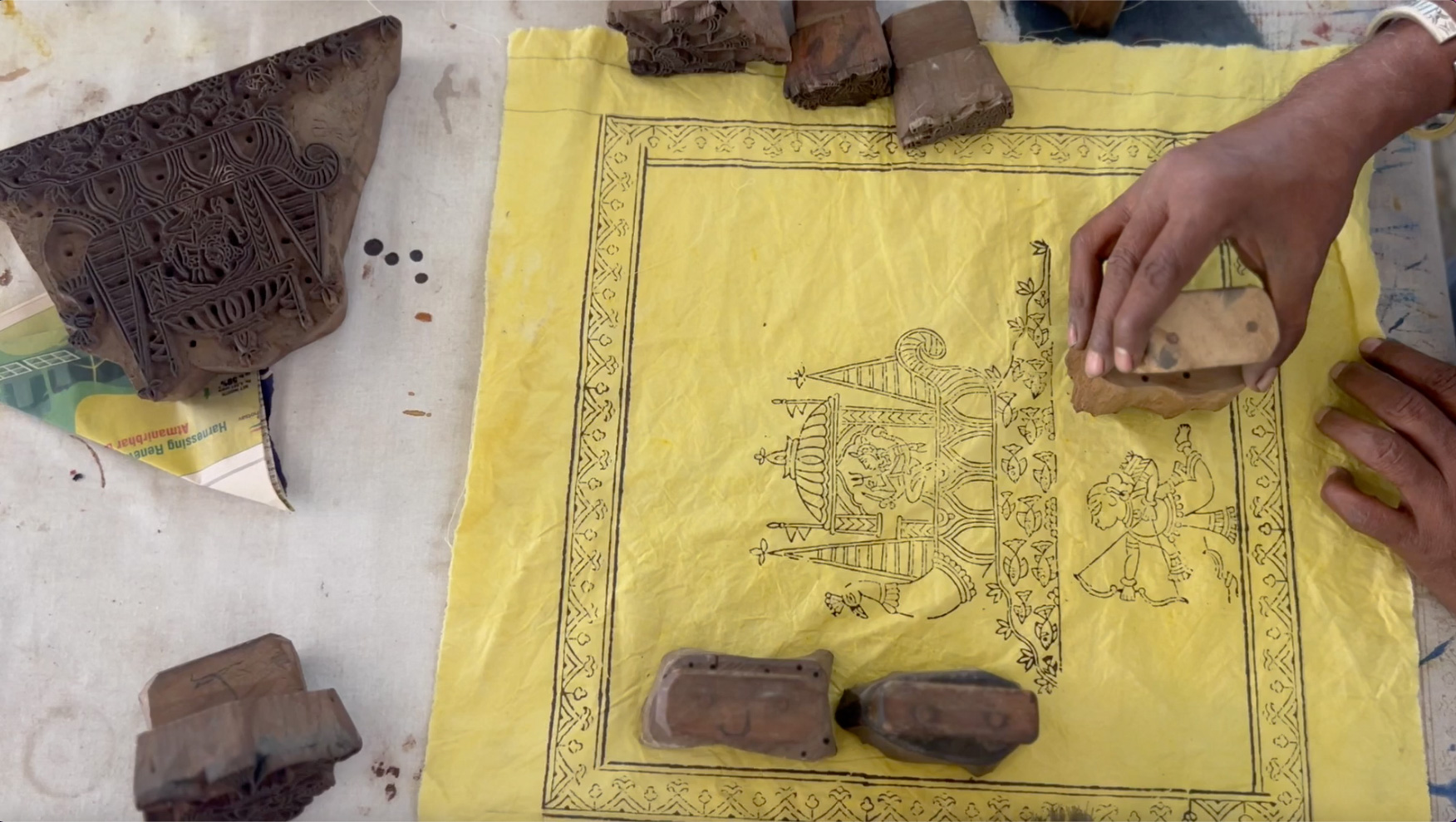
Jayanti Bhai Block Printing
Jayanti Bhai starts to print.
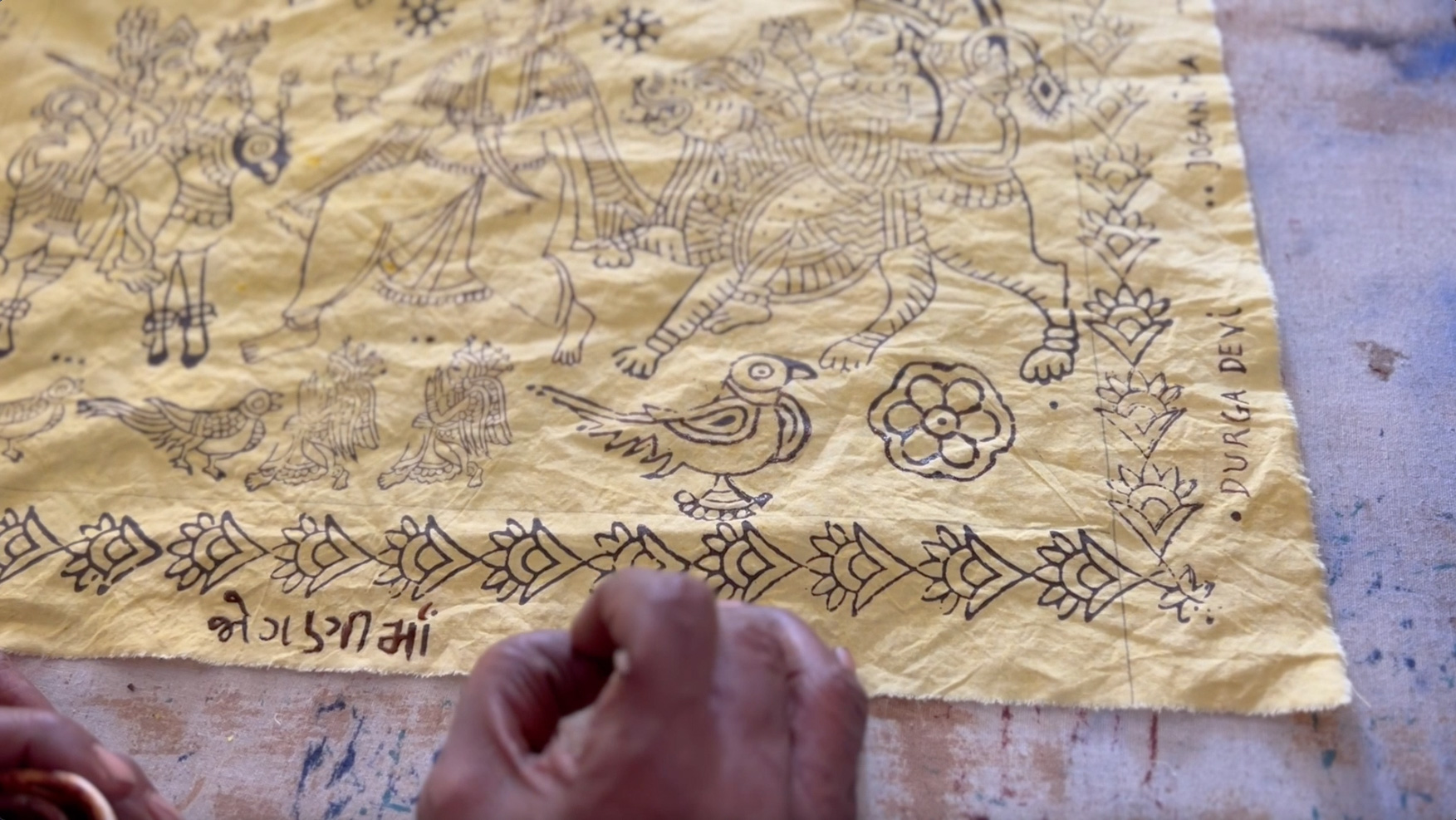
Qalam Kalamkari Meladi Ma
Jayanti Bhai and Kirit draw the outlines in the pre mordated cloth with the qalam using black paint. The kalamkari starts.

Filling In
Rohan, Nimisa and Komal Chitara do the filling in using alum paint and ferrous acetate paint.
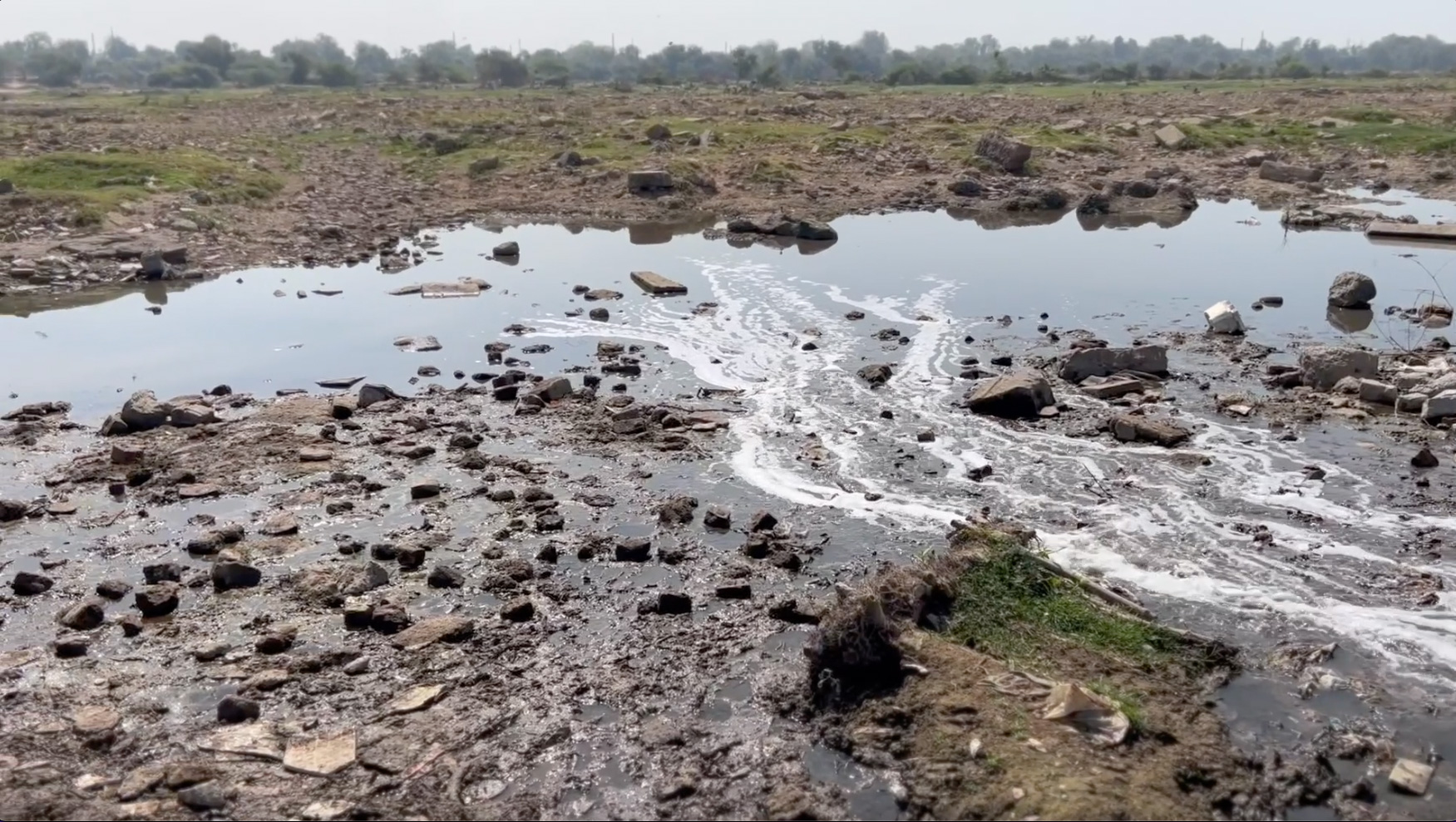
The Sabarmati River
Kirit talks about the importance of the Sabarmati river for the dyers and the textile culture and the problems that they are facing due to the scarcity of water.
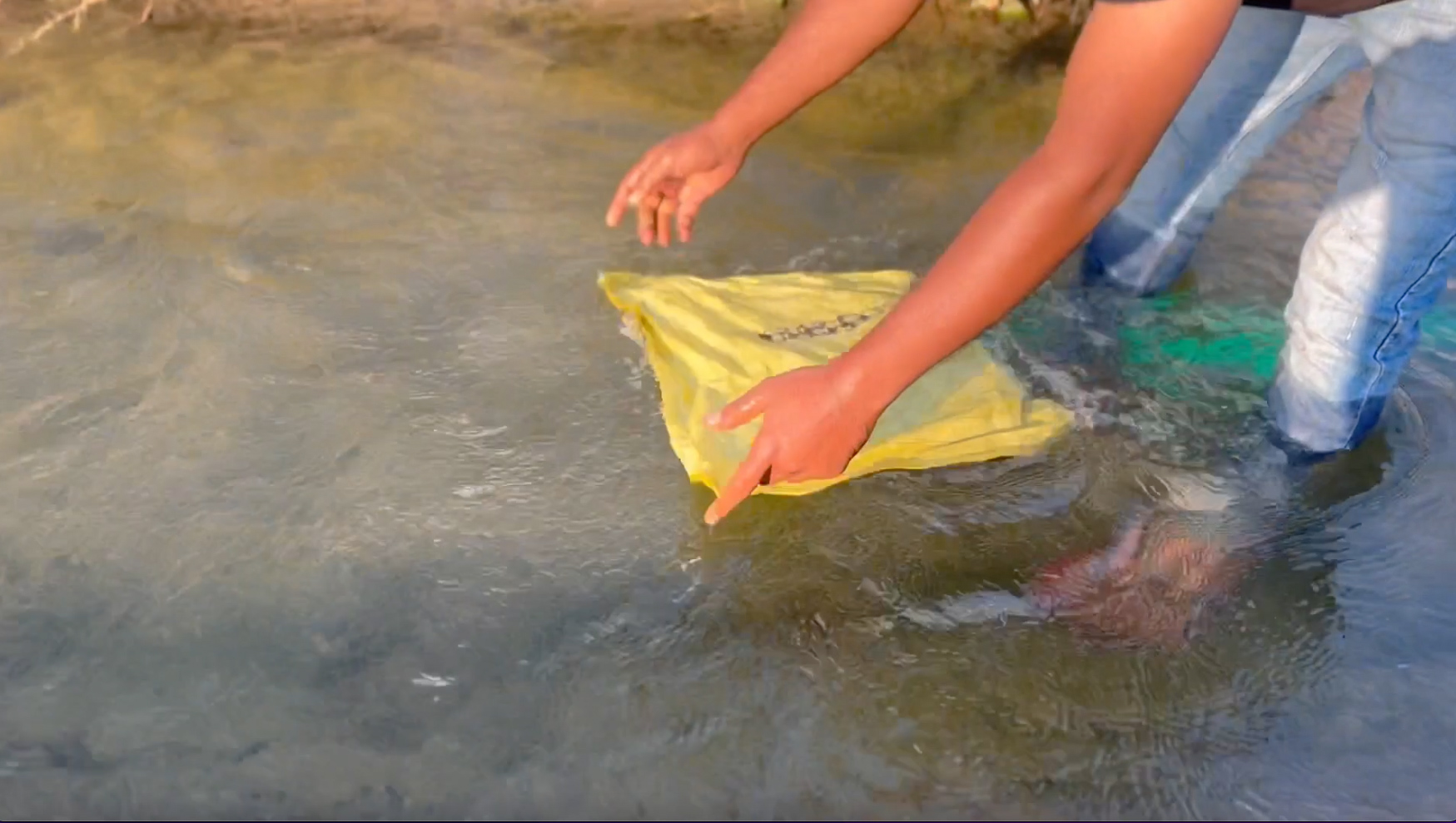
Wash
Kirit washes the painted cloths, chandarvos, in a canal a few kilometers from Ahmedabad. The washing requires skill and patience to release the excessive gum that coagulates when the paint had dried on the fabric’s surface.
Boiling
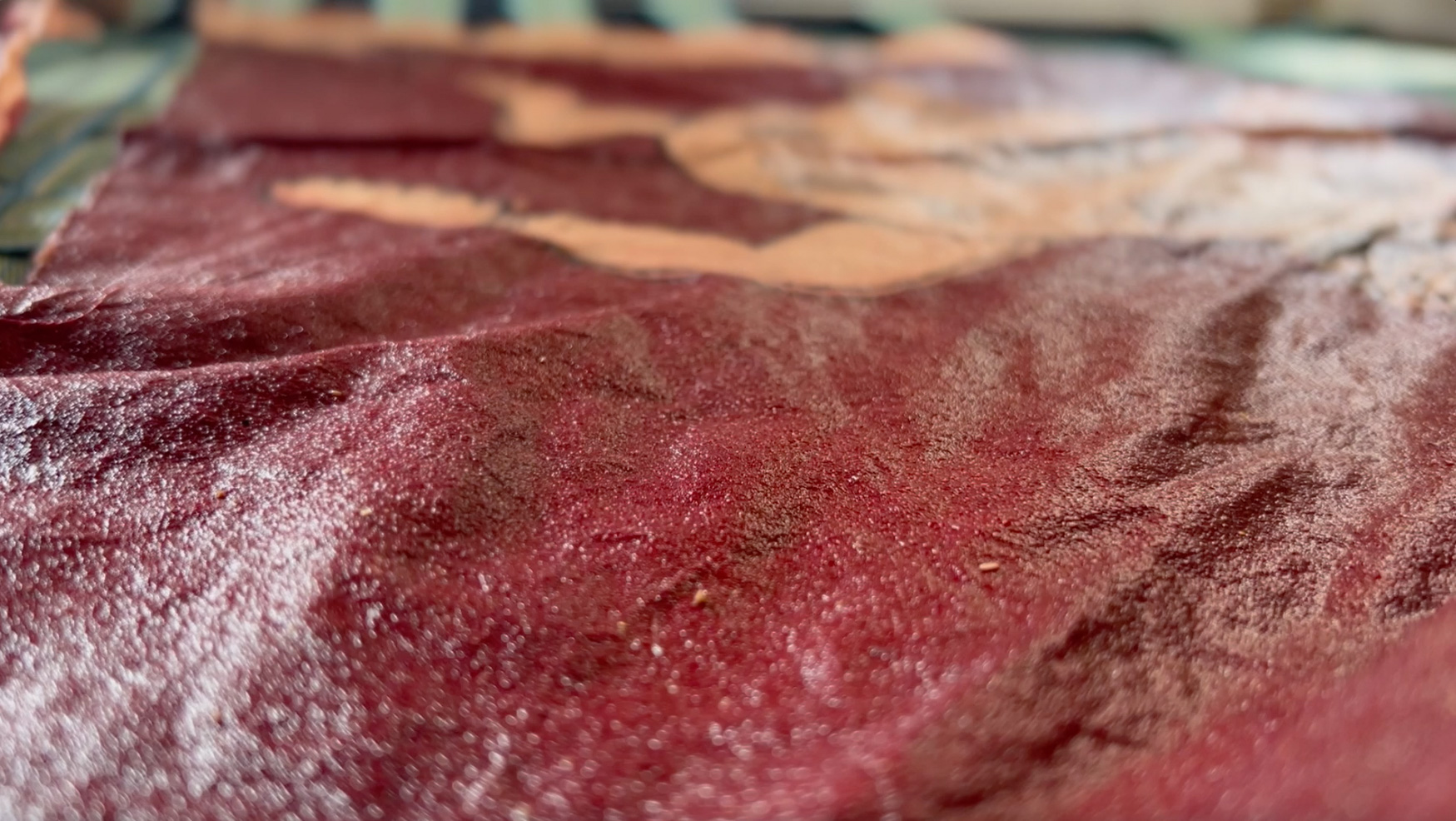
Kajal lightens up the fire to boil the water in the pot. Jayanti Bhai adds dawuria flowres and adds them into the boiling pot along with a piece of alizarin powder wraped in a piece of cloth. After a few minutes he checks the chandarvos. After half an hour the colour develops from yellowish shades to orange ones due to the action of alizarin that enhances the properties of harda (Terminalia chebula powder with alum and iron acetate). After one hour the same chandarvo is developing the colour from orange to intense bright red. It is the final stage. After taking the chandarvos out of the boiling pot, Jayanti Bhai puts them to dry in the shade.
Chadrakhan Chitara
Chadrakhan Chitara is the brother of Jayanti Bhai, he is a renown Chitara, won important national awards in India. These awards are important events for the recognition of the community and its’ practice.

Santosh Block Maker
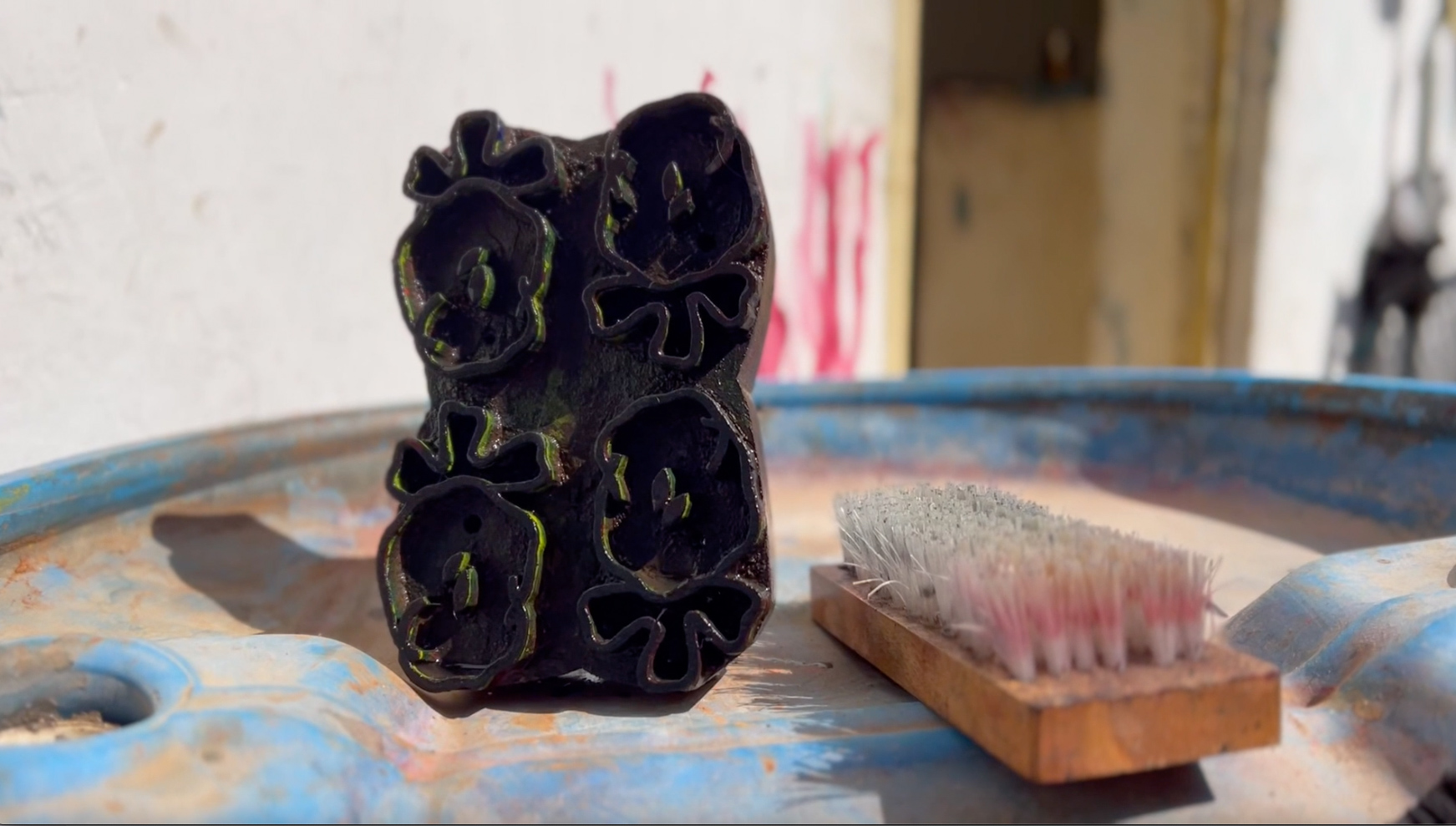
Jayanti Bhai takes me to a place in Ahmedabad to introduce me to Santosh, the block maker he works with. Wooden blocks are commonly made from teak wood, locally known as sagwan.
Jayanti Bhai Washing Blocks
Jayanti Bhai washes wooden blocks after use.
Three Sisters
Sismógrafo, O’Porto
A Multiplicação dos Fingidos
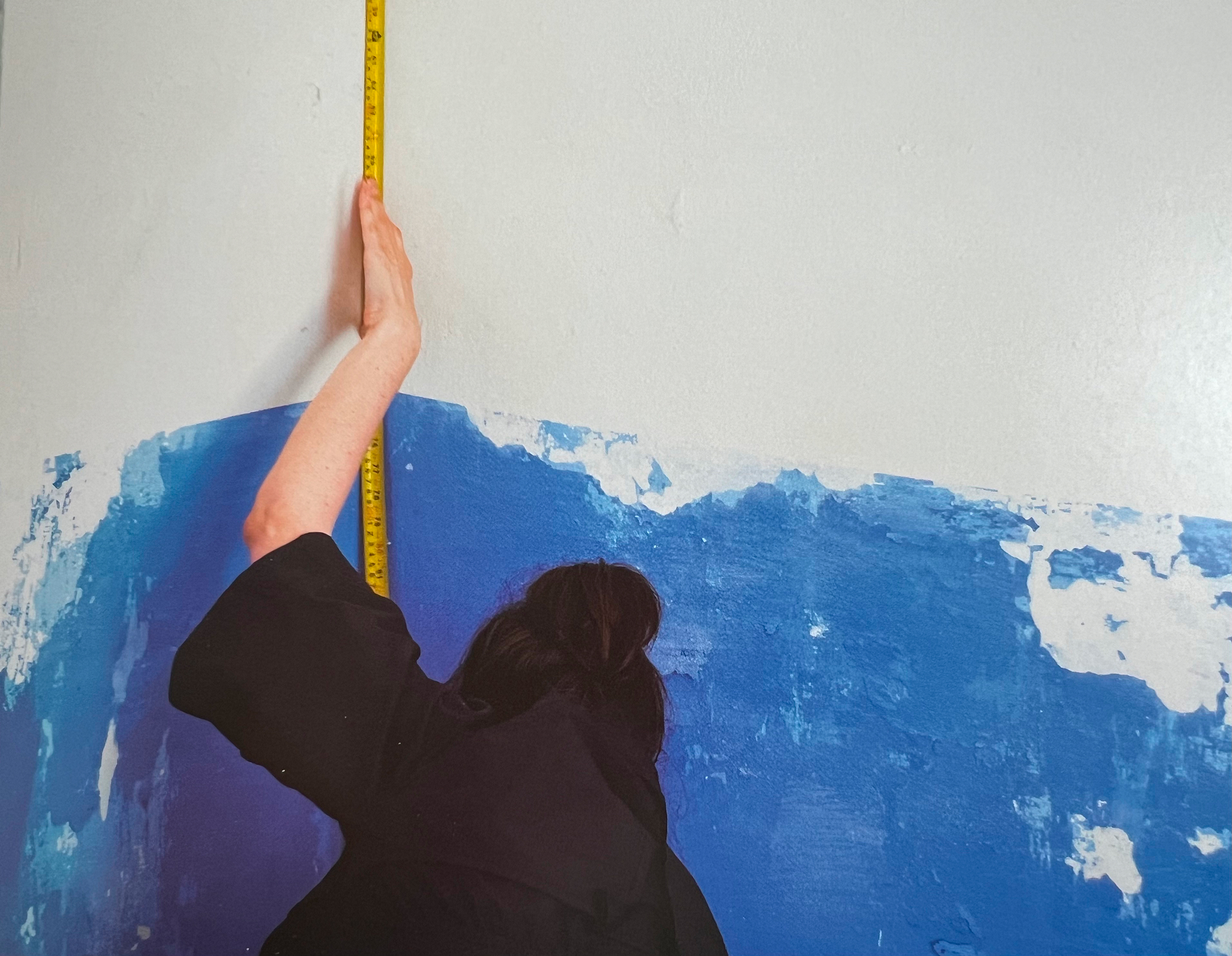
Land Art Cascais
The Sequel
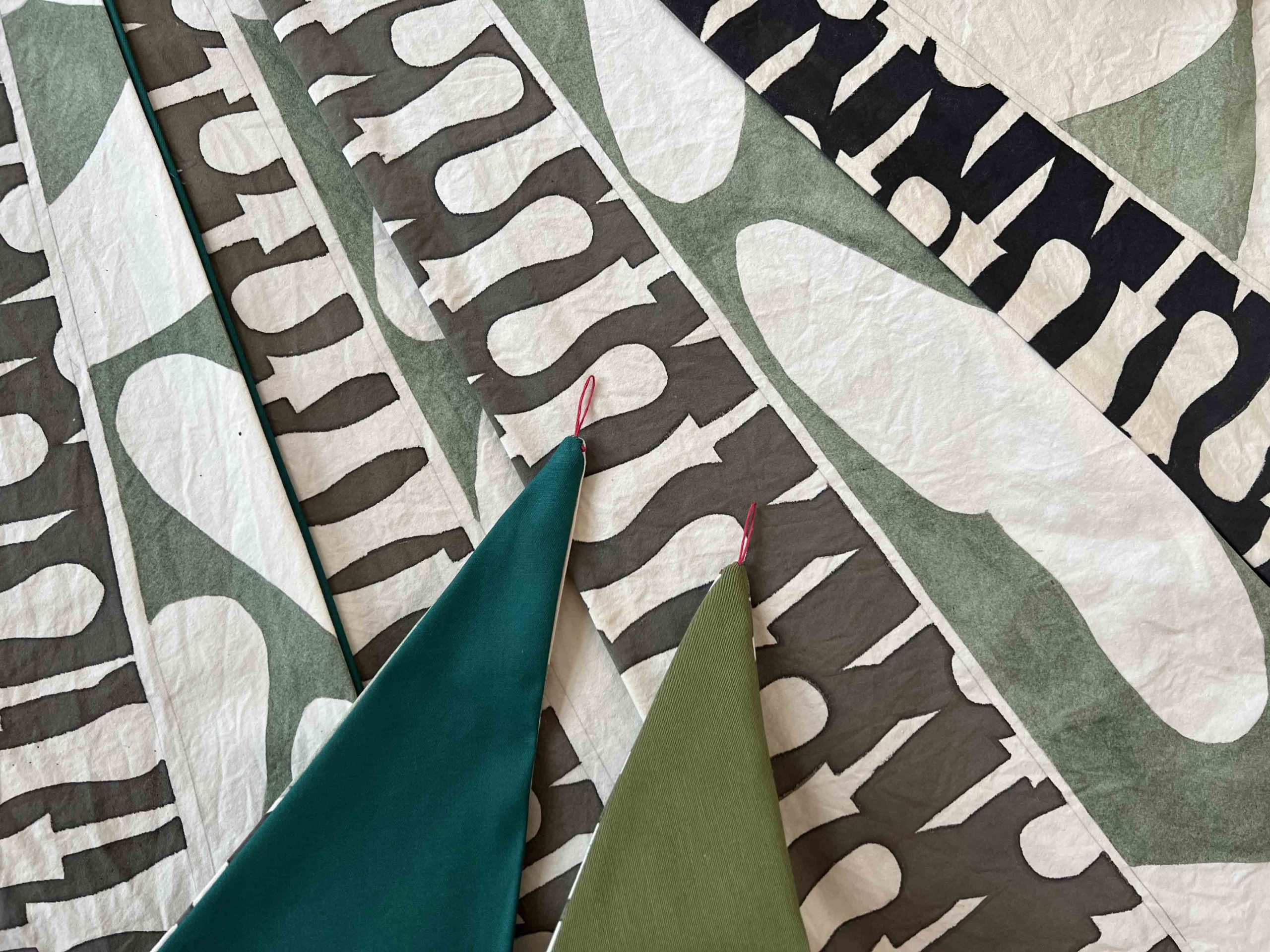
MNAC, Lisbon
Selva
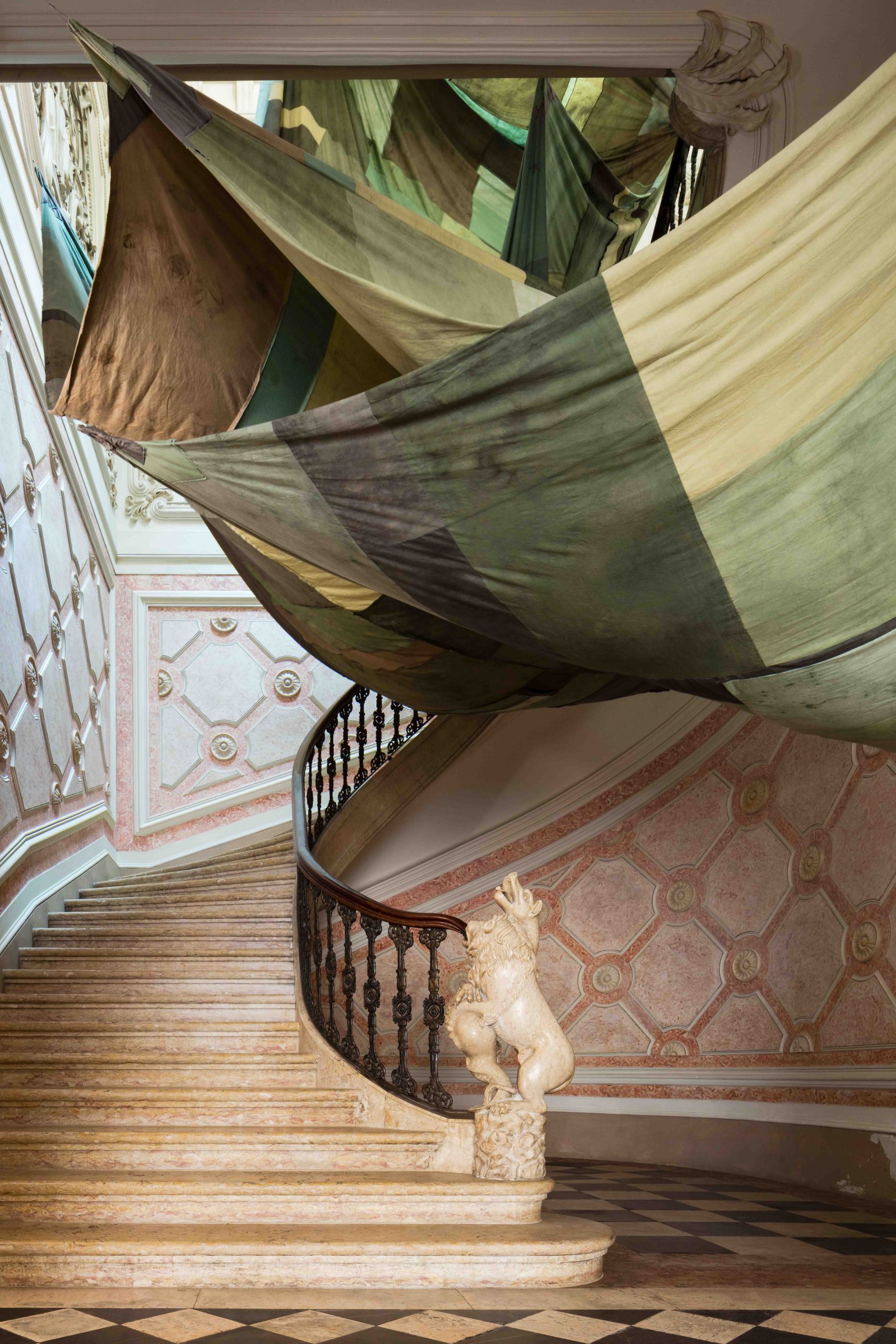
Brotéria, Lisbon
Ninguém. Só eu
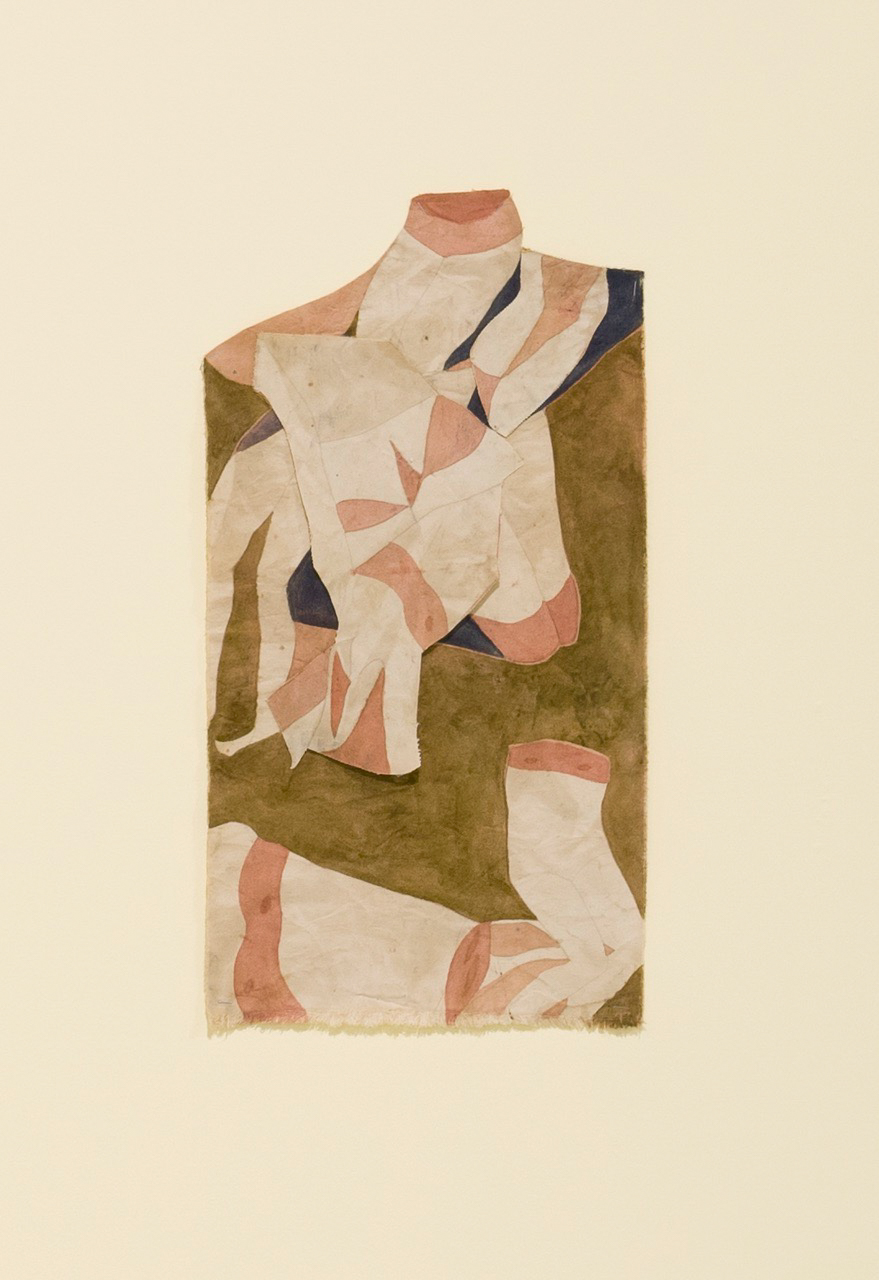
Centro de Arte Oliva, São João da Madeira
Plano de Contingência
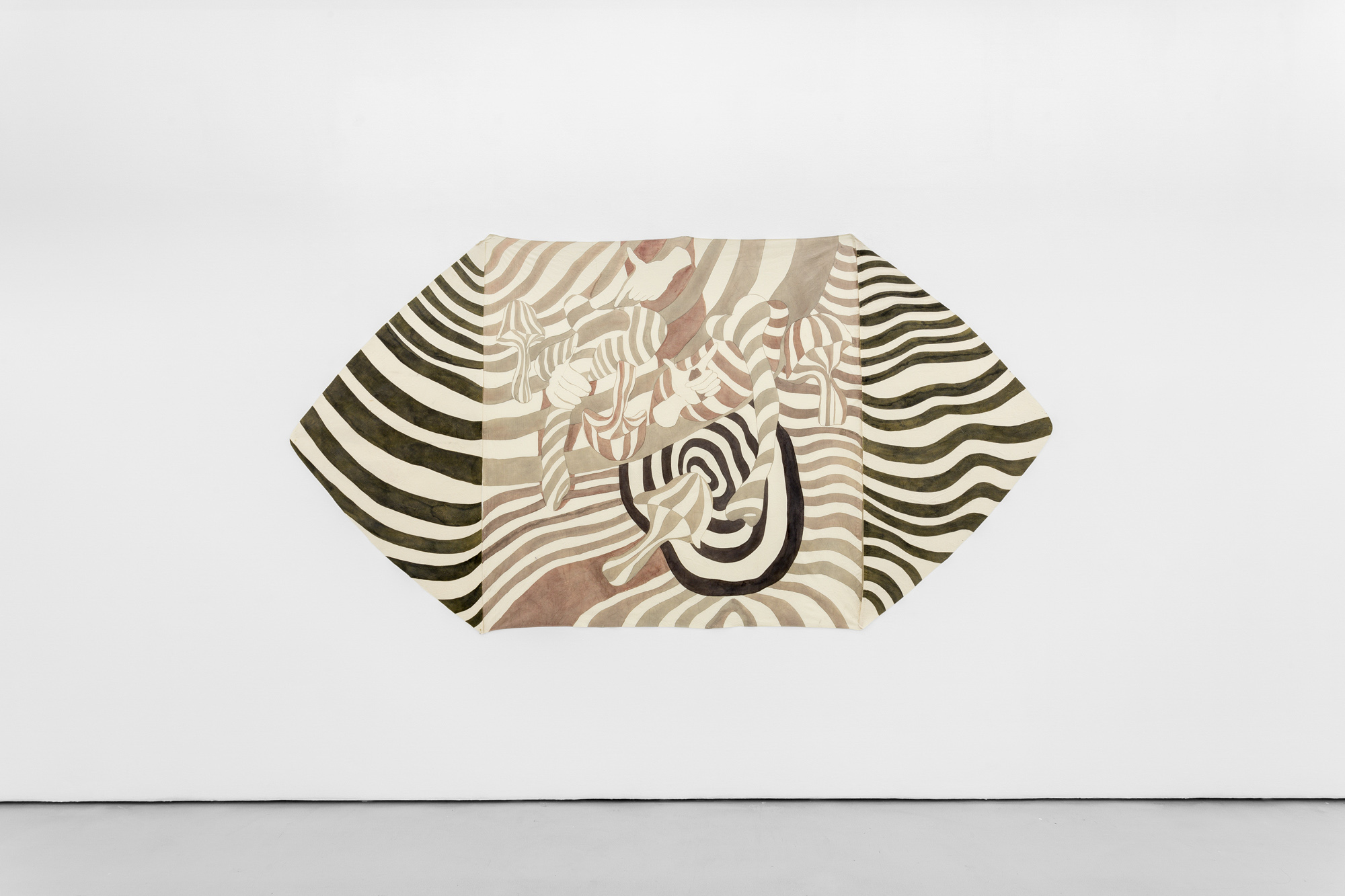
Cristina Guerra, Lisbon
Às Nonas, Midas nos Dedos Medram e Mondam
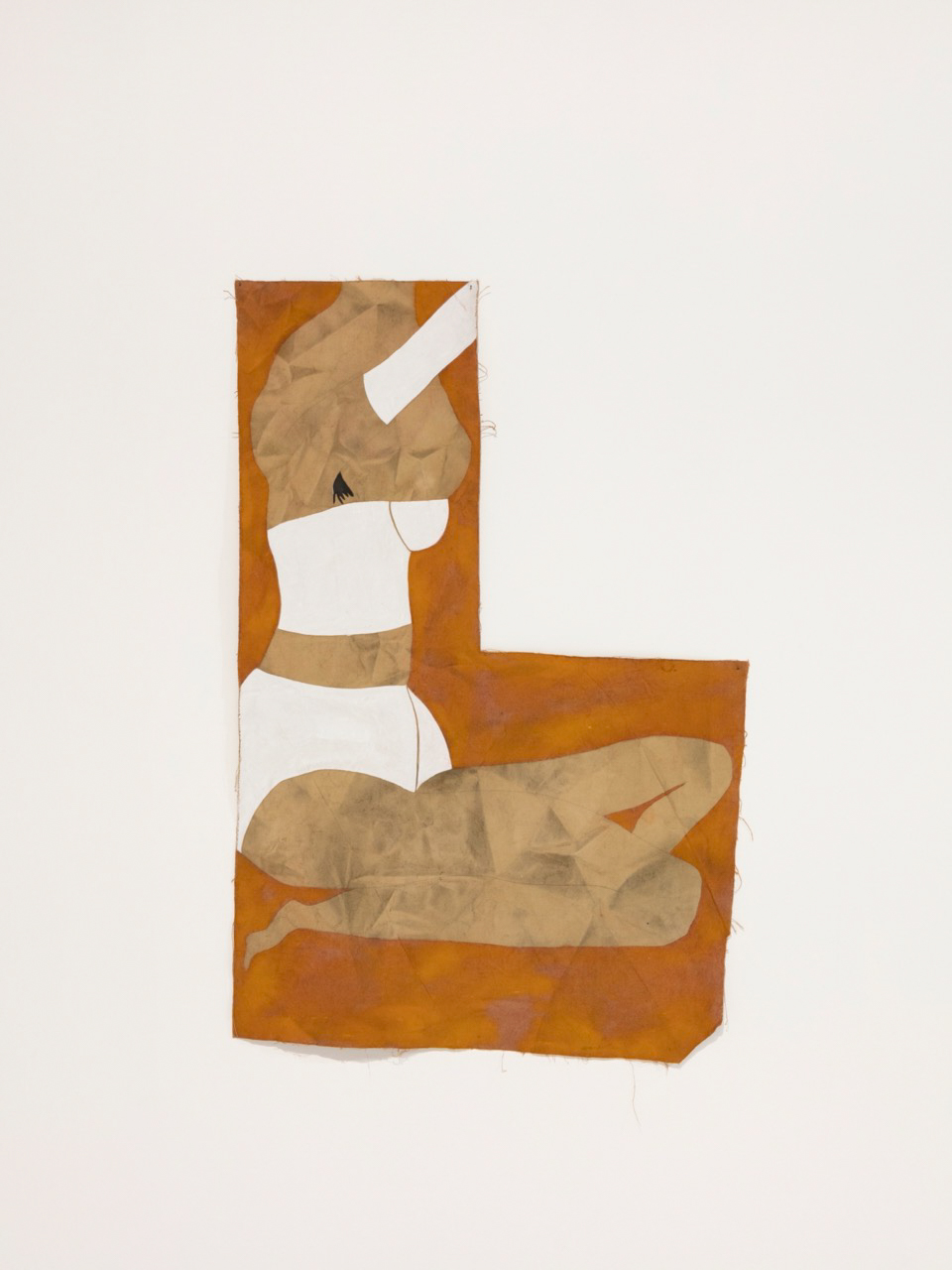
GALERIA DE ARTE DA CÂMARA MUNICIPAL DE ALMADA
Piquenique
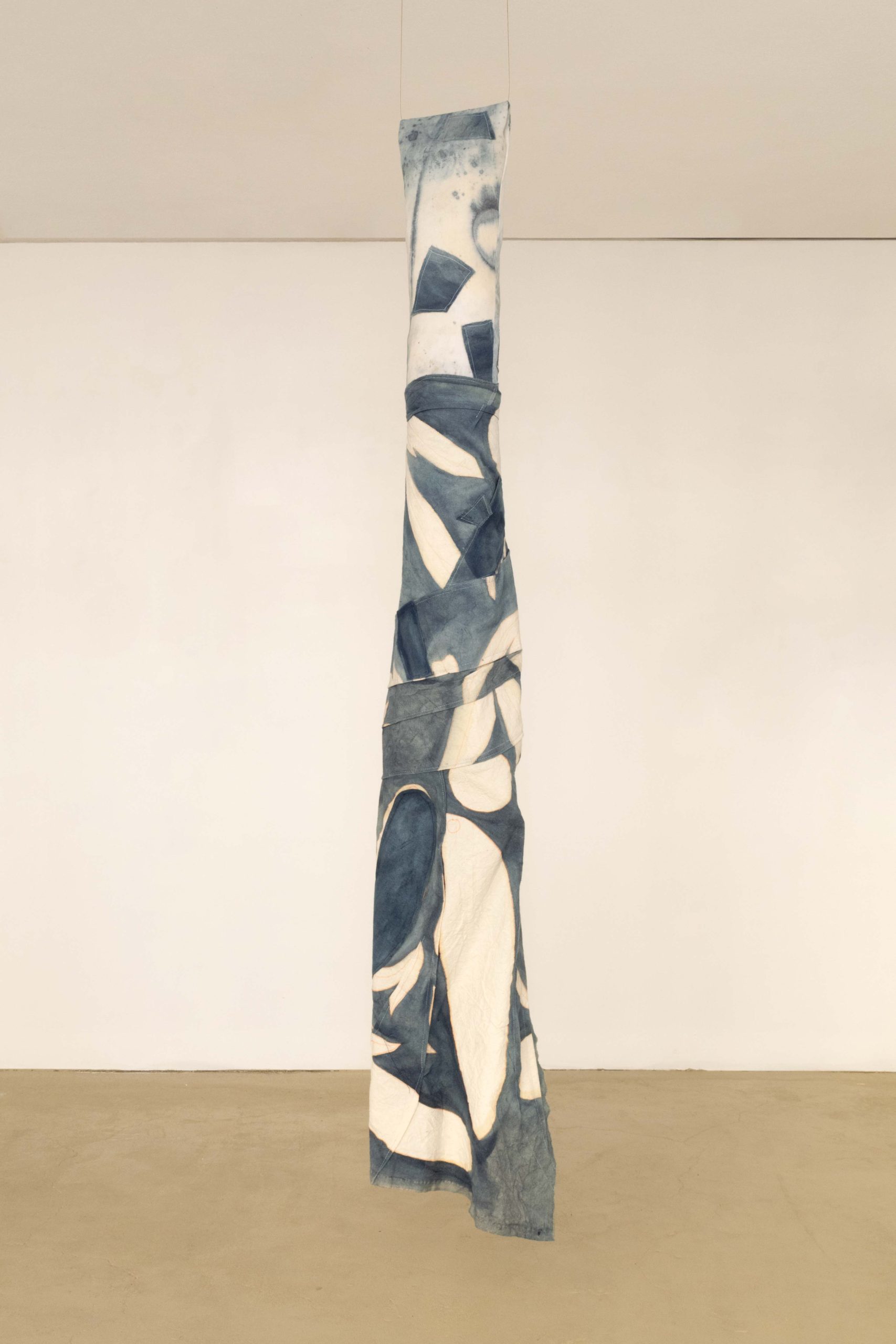
Verão, a project space run by Antonia Gaeta, Lisbon
Navigator
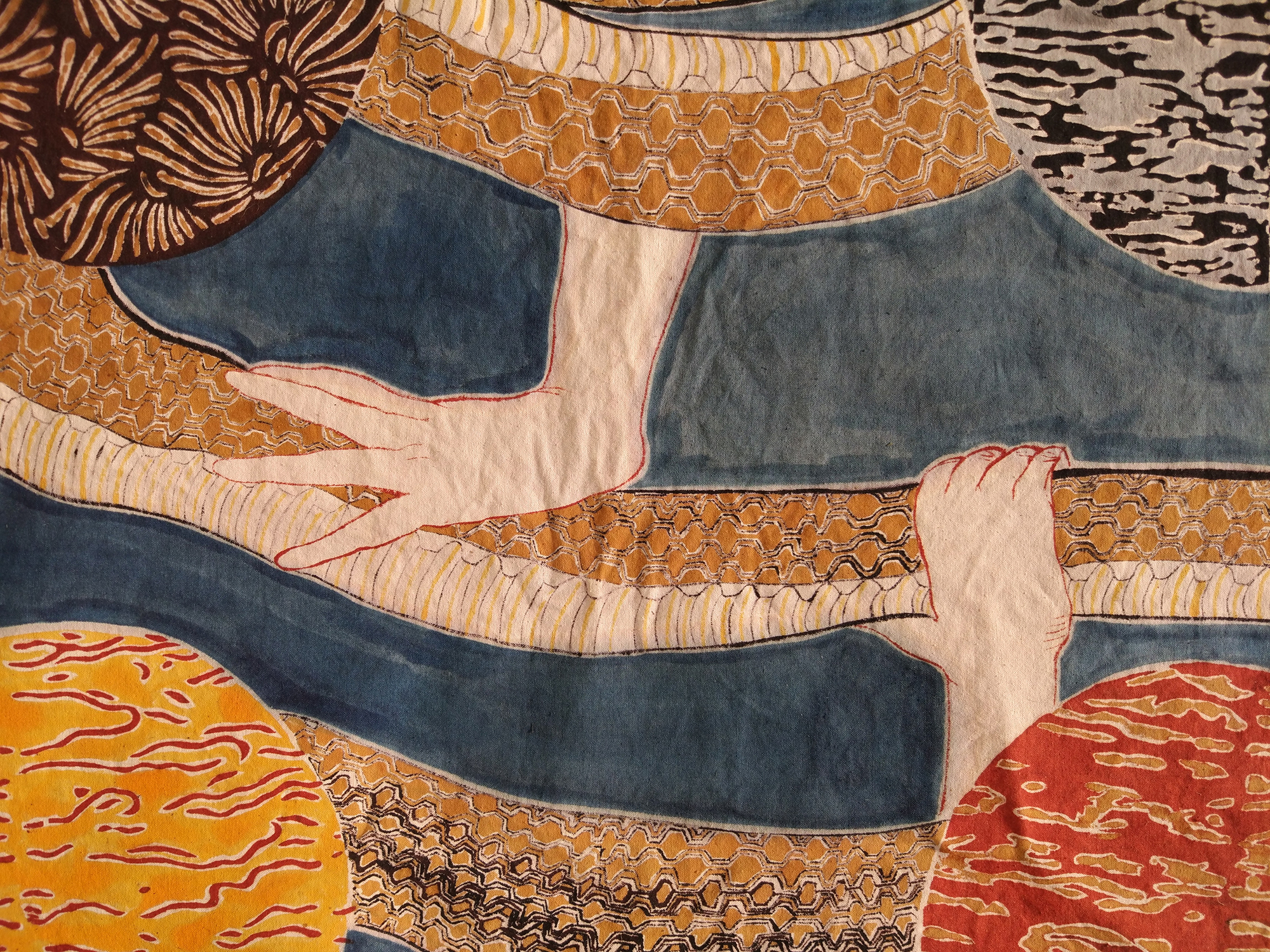
Chiado8, Lisbon