Dheeraj Chhipa
Bagru, India
DABU AND BAGRU WITH DHEERAJ CHIIPA
Dheeraj Chhipa is a printer whose profession is reflected in his surname Chhipa, the Rajasthani word for printer. It is a craftsmanship, appreciated and respected throughout India. Dheeraj acquired his knowledge from his father. Here, the generational thread is continuous. He currently has a degree in Textile Design from the Indian Institute of Crafts and Design in Jaipur. I contacted him for a dabu and bagru workshop. He told me about his practice. The next day I went to Bagru to meet him. Bagru is the name of an industrial town dedicated to textiles next to Jaipur. It is also the name of a printing style. It was March 2023. The workshop started in the morning at nine o’clock and finished at seven in the evening. I asked him if I could film the workshop, since I had already worked with both techniques in 2018. He agreed and these videos are only possible thanks to his collaboration.
( Media )
DABU WITH DHEERAJ CHHIPA
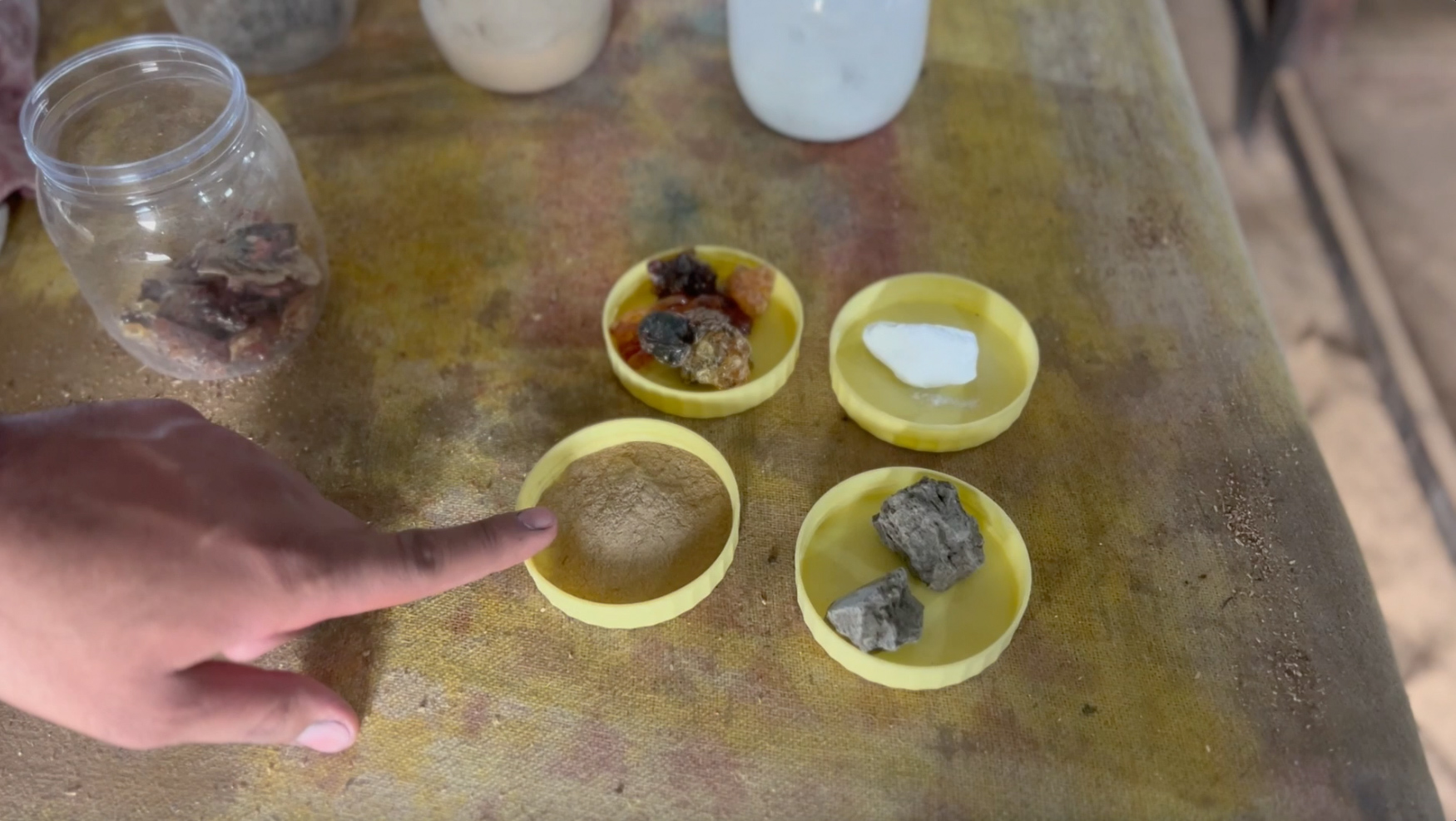
Dabu Paste
Dabu refers to a printing and dyeing technique on cotton fabric specific to the Bagru village, an industrial town traditionally dedicated to textile dyeing and printing in Rajasthan. It is a resist technique in which wooden blocks are soaked in a mud - dabu - printed by hand on the fabric in patterned repetitions and then dipped in the pot of indigo.
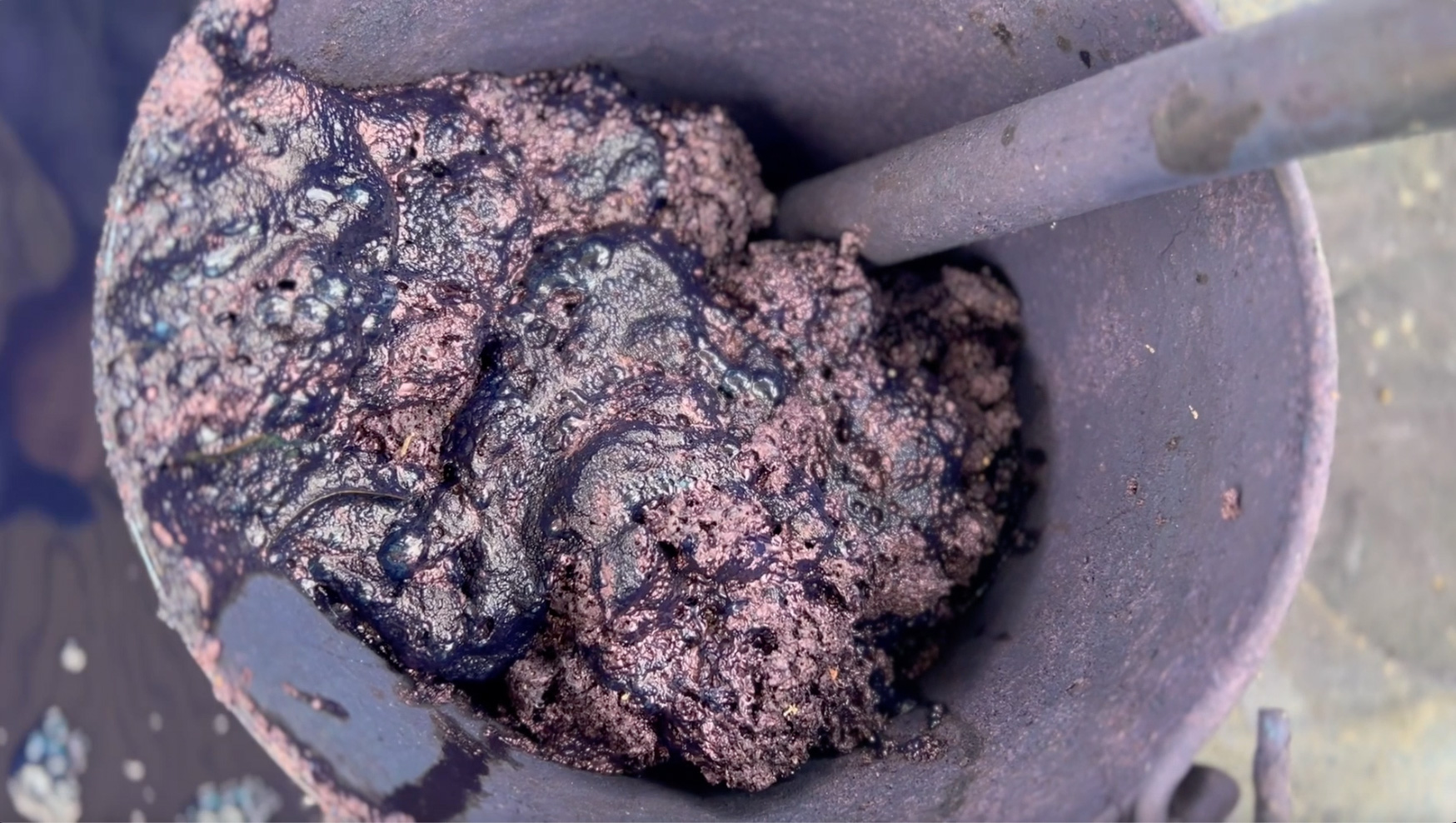
Indigo Vat
-
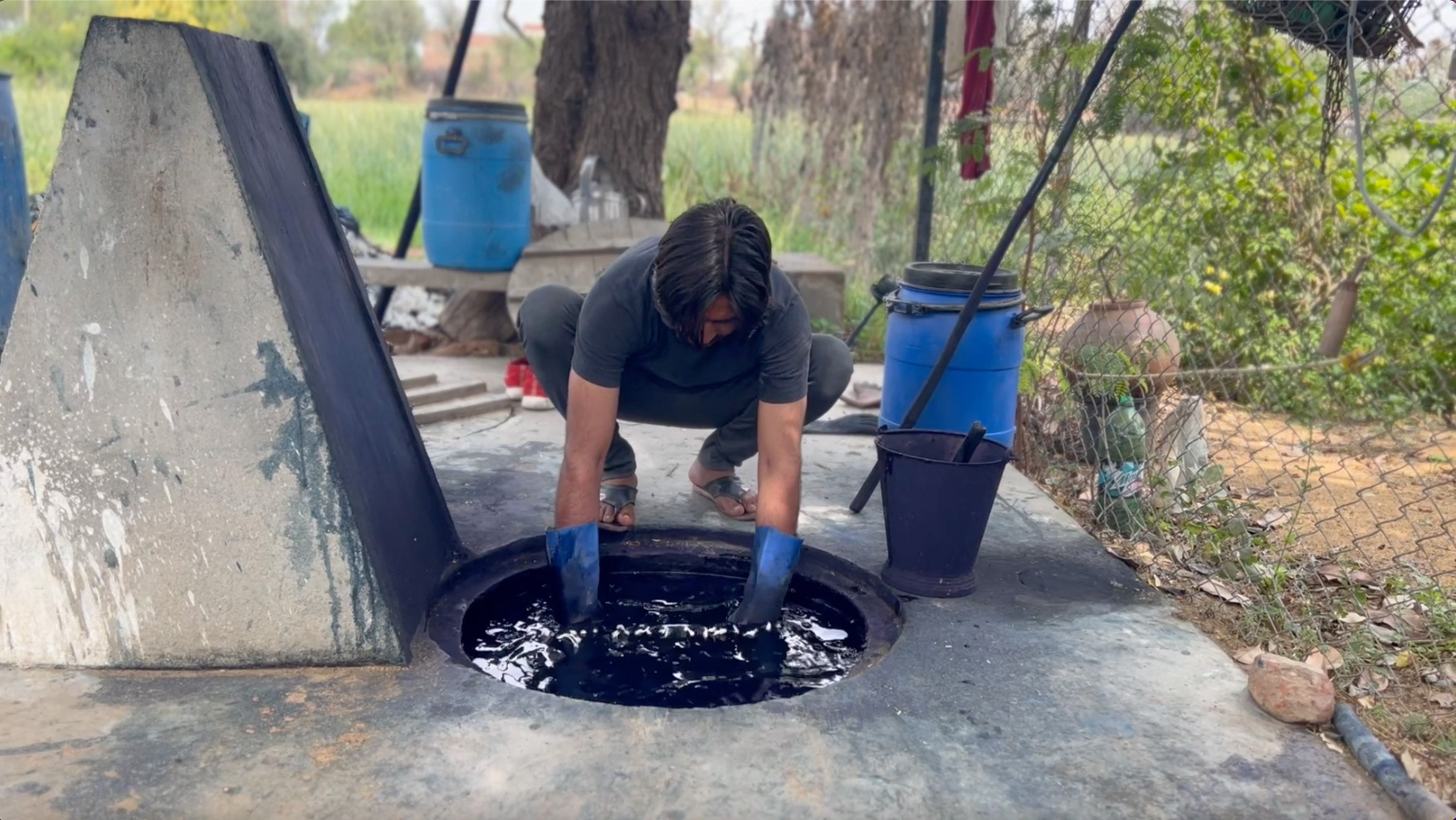
Indigo Dyeing
Dheeraj dips carefully the previously mud resist printed fabric in the indigo vat. He dips twice to intensify the color, avoiding oxygen bubbles from interfering in the dye. Then the fabric has to dry in the open air to allow the transformation of the indigo from green to blue due to oxygenation.
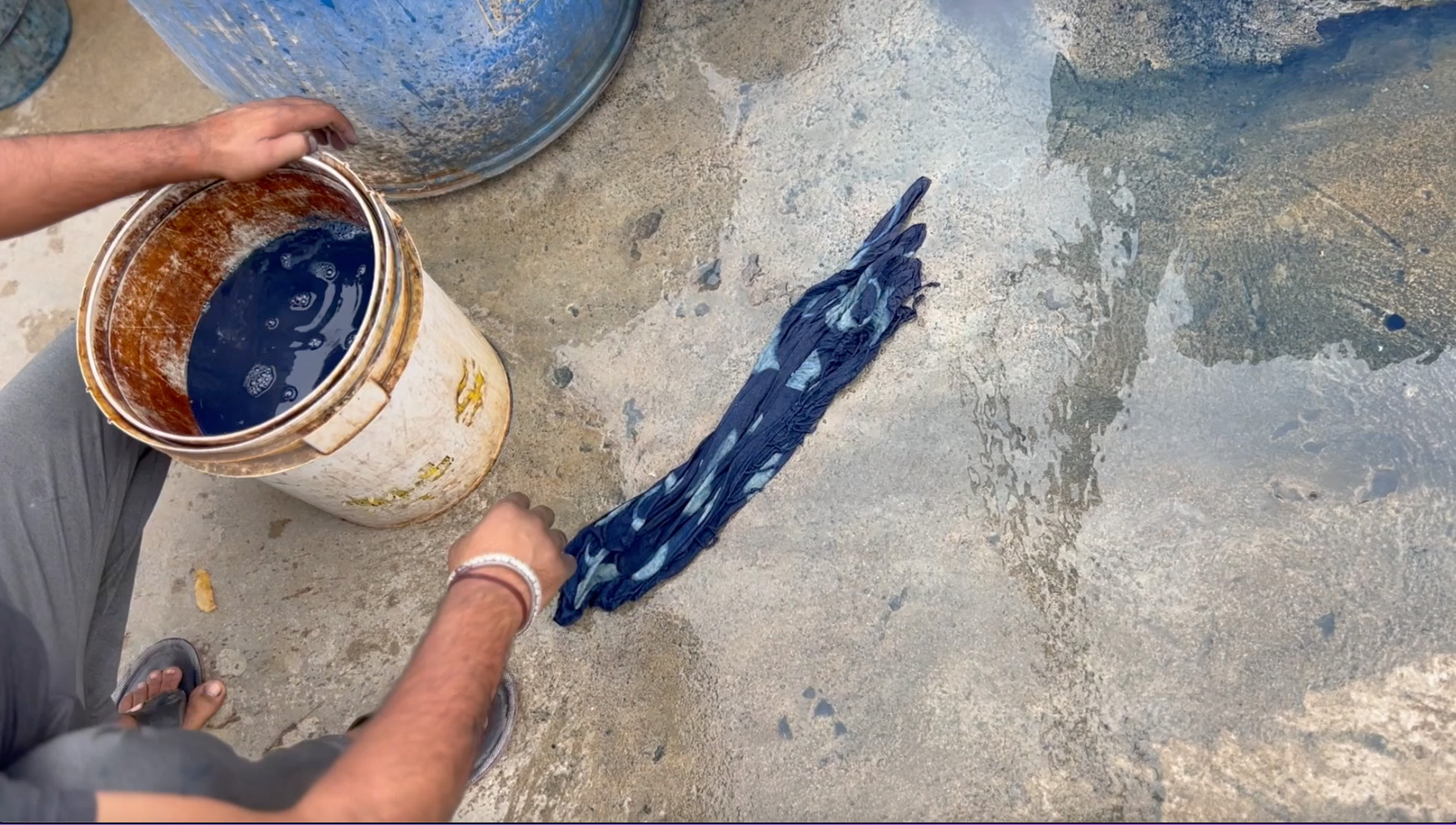
Final Washing
Finally, the fabric is skillfully washed and the dried mud is removed, leaving the areas in contact with the mud undyed.
BAGRU WITH DHEERAJ CHHIPA
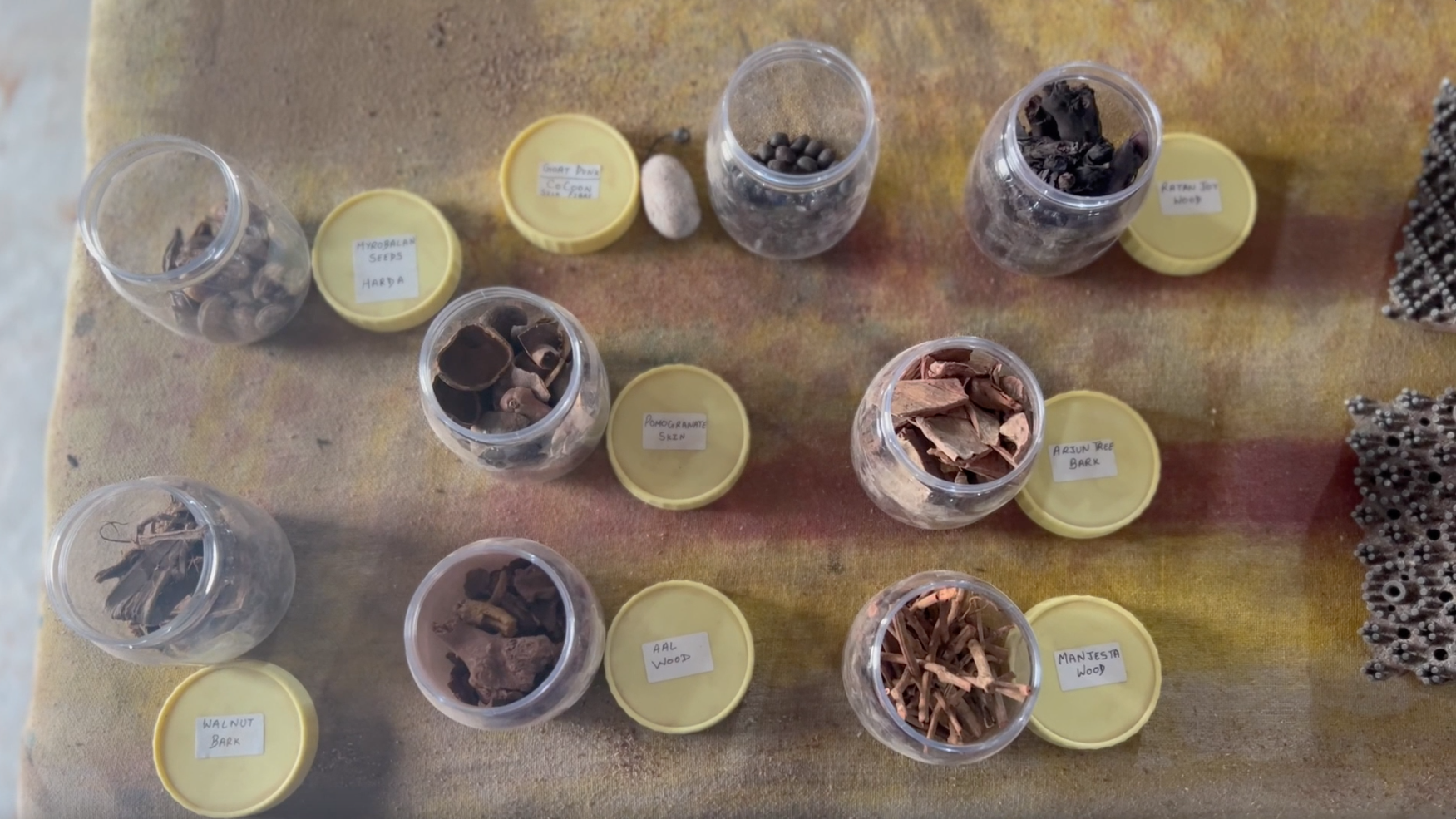
Dyestuff
Dheeraj displays on the table several jars with dyestuff specially used in a Bagru print. Most of dyestuff, he says, is also used in Ayurveda medicine.
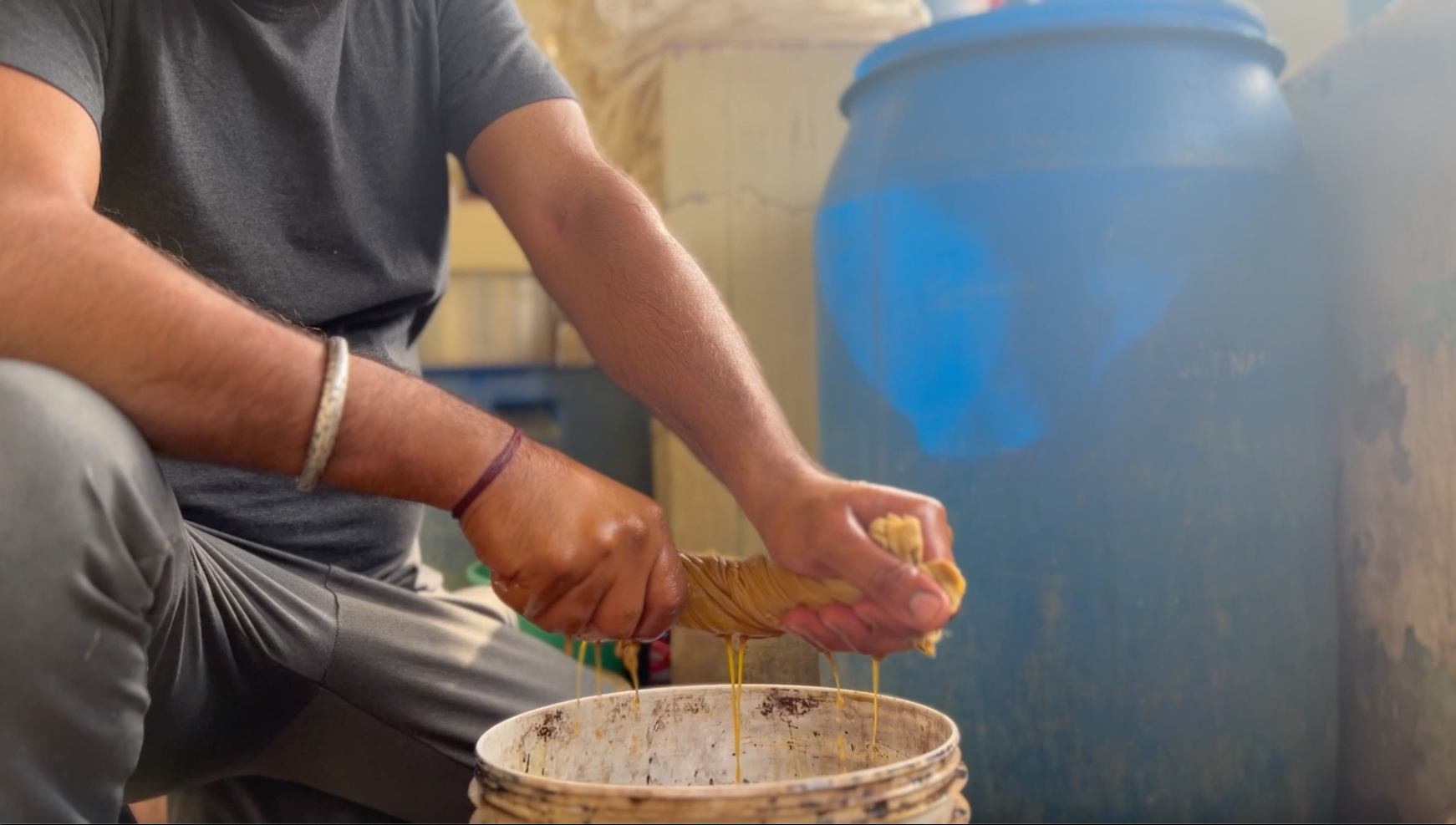
Harda Mordant
The cloth was previously washed to soften up the fibers, so the cloth can be efficiently dyed in harda. Harda’s botanic name is Terminalia Chebula. This can be called the first mordant bath, usually the water is at lukewarm temperature.
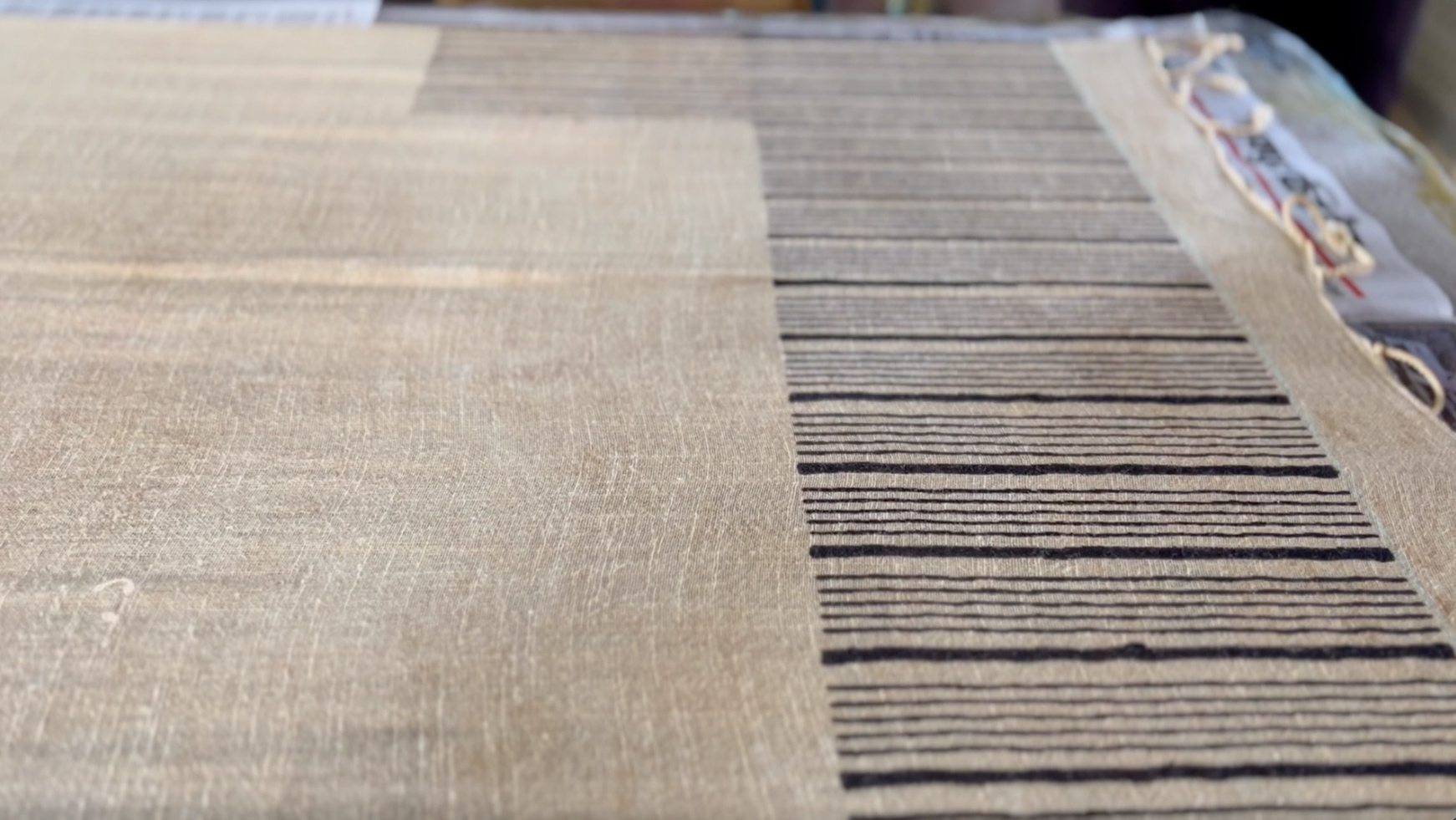
Cham Lal Printing Black
Dheeraj took me to the printing facilities where we met other chhipas (printers), colleagues of him. The first color to be used in a Bagru print is black, obtained by a mineral source, that is ferrous acetate. Cham Lal starts to print.
Printing Alum
After black, the next color is red. That means after ferrous acetate being printed in the fabric, the next printing substance is alum, a double salt. We can see the alum paste in the printer’s tray. It has a thick consistency, usually obtained by adding acacia gum or tamarind seeds powder into the dye.
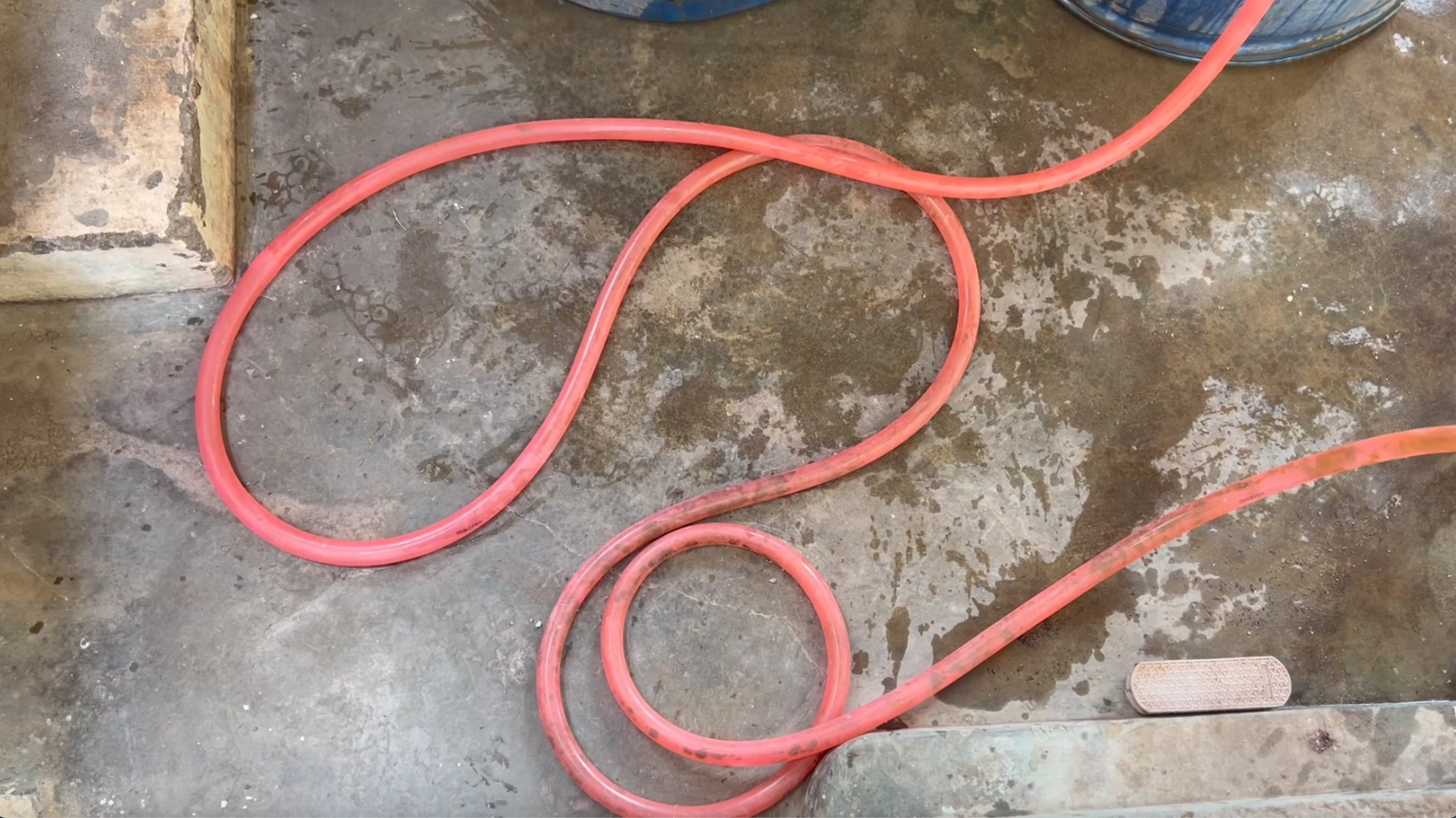
Water and Buckets
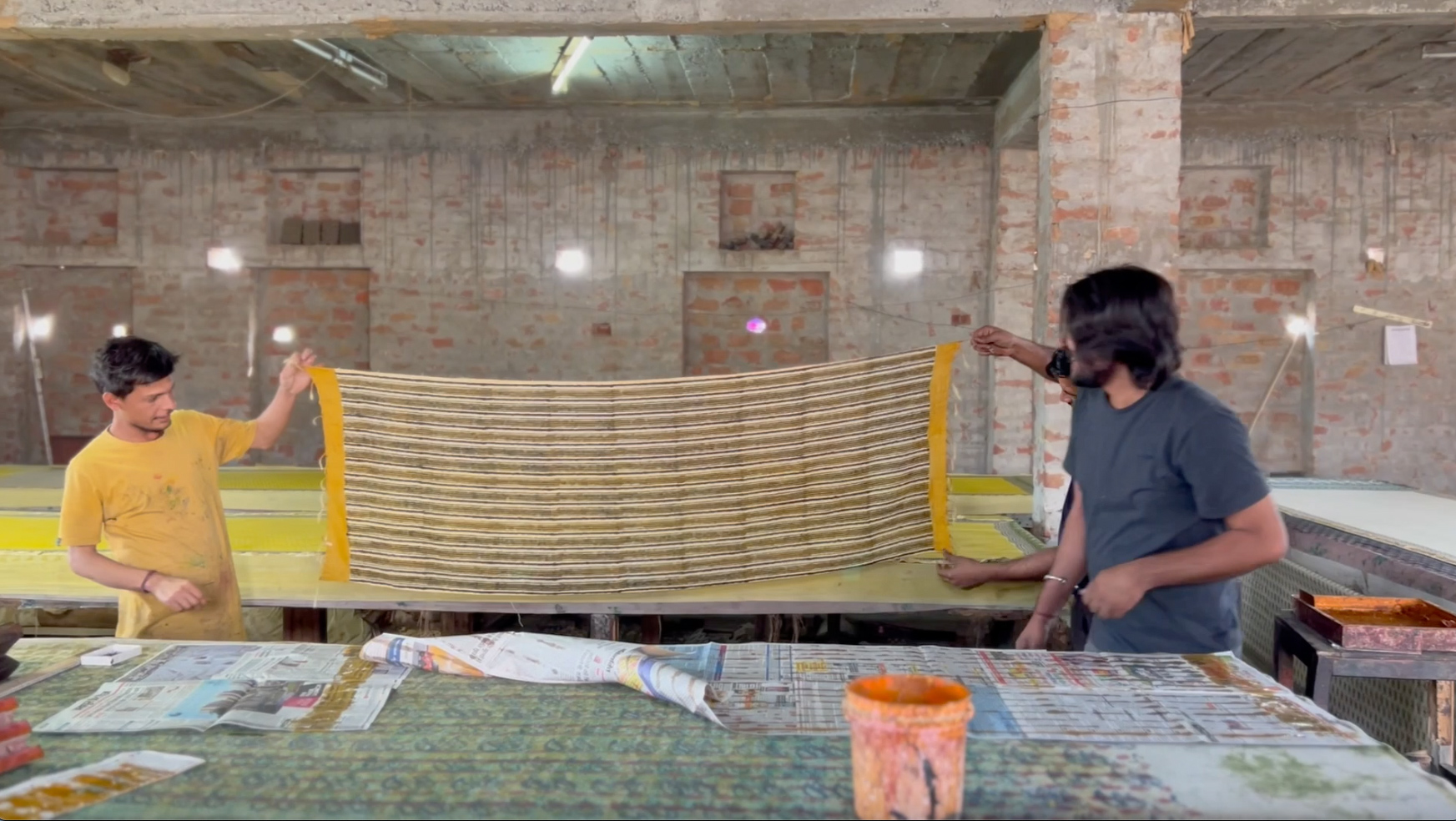
After printed, the cloth has to be exposed to sunlight in open air until it dries completely. In the meanwhile, is time to fill the buckets with water.
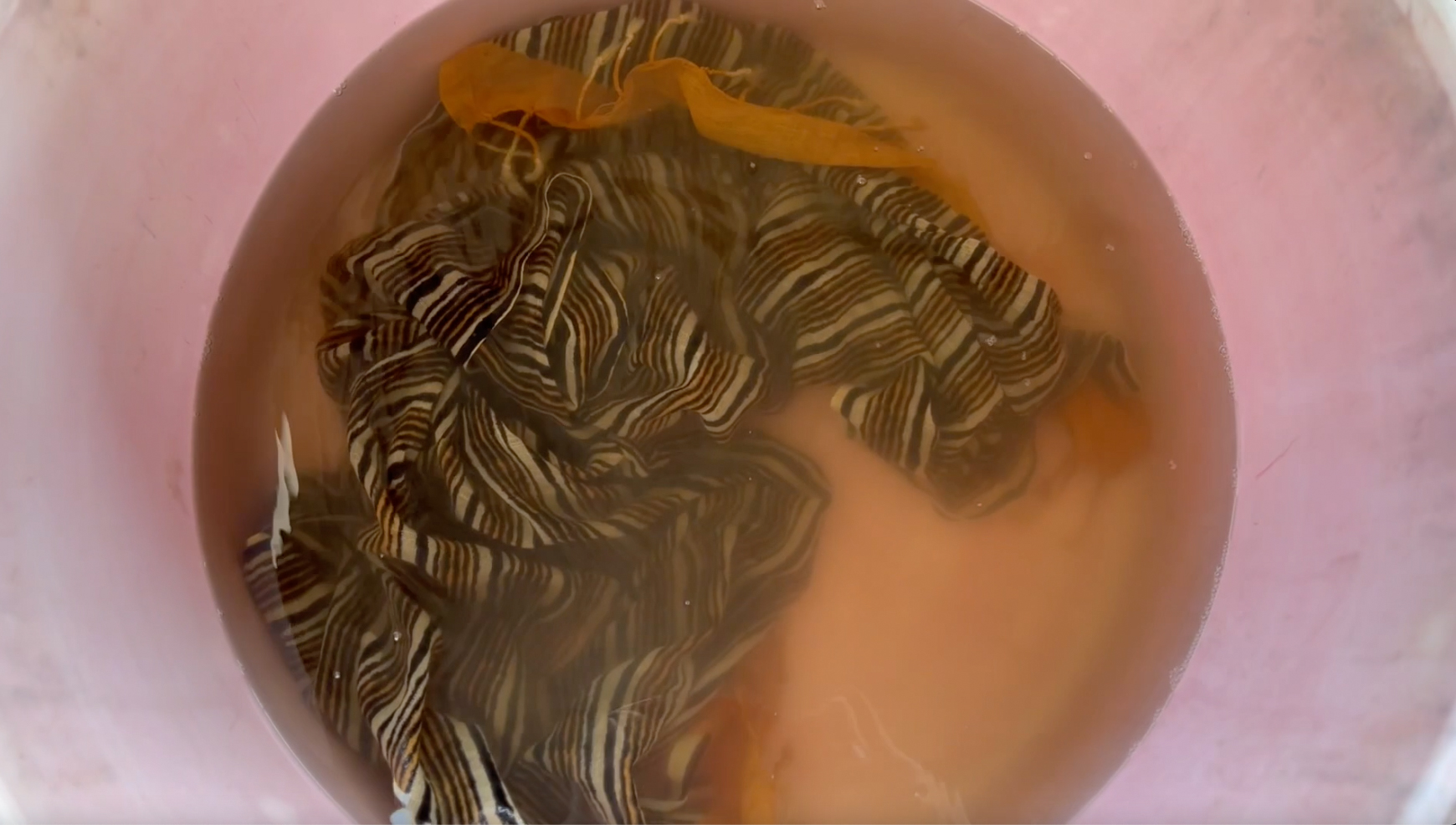
Harda Washing Whitening Fabric
Dheeraj adds harda (Terminalia chebula powder) in to the water, at a lukewarm temperature. The printed cloth is dipped and washed in that solution. Dheeraj tells me that is the way to whitening up the unprinted areas of the cloth.
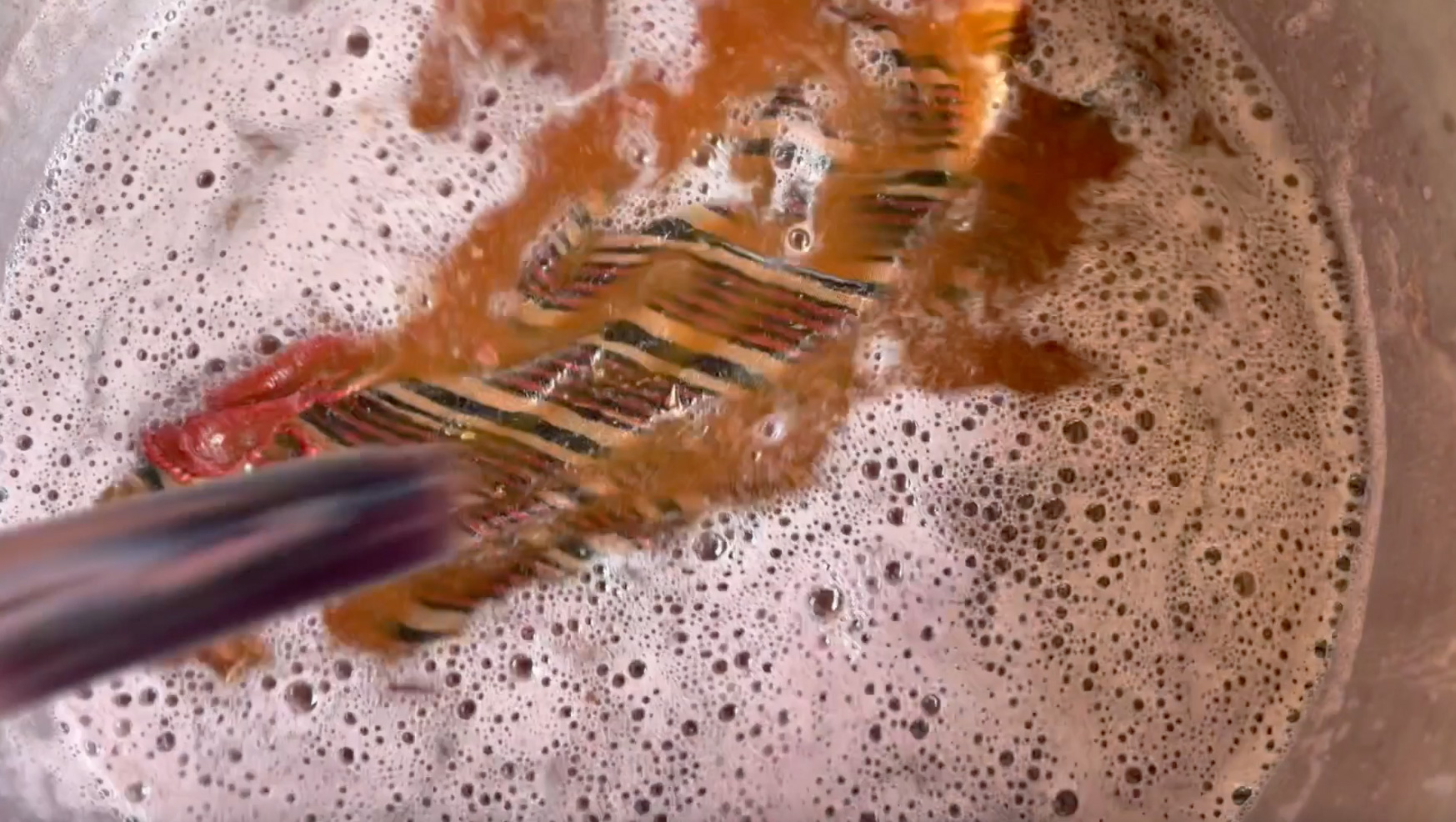
Post Mordant Bath Alizarine Datura
This is what a post mordant bath, where the printed substances (ferrous acetate and alum) develop into final durable natural colors (black and red).
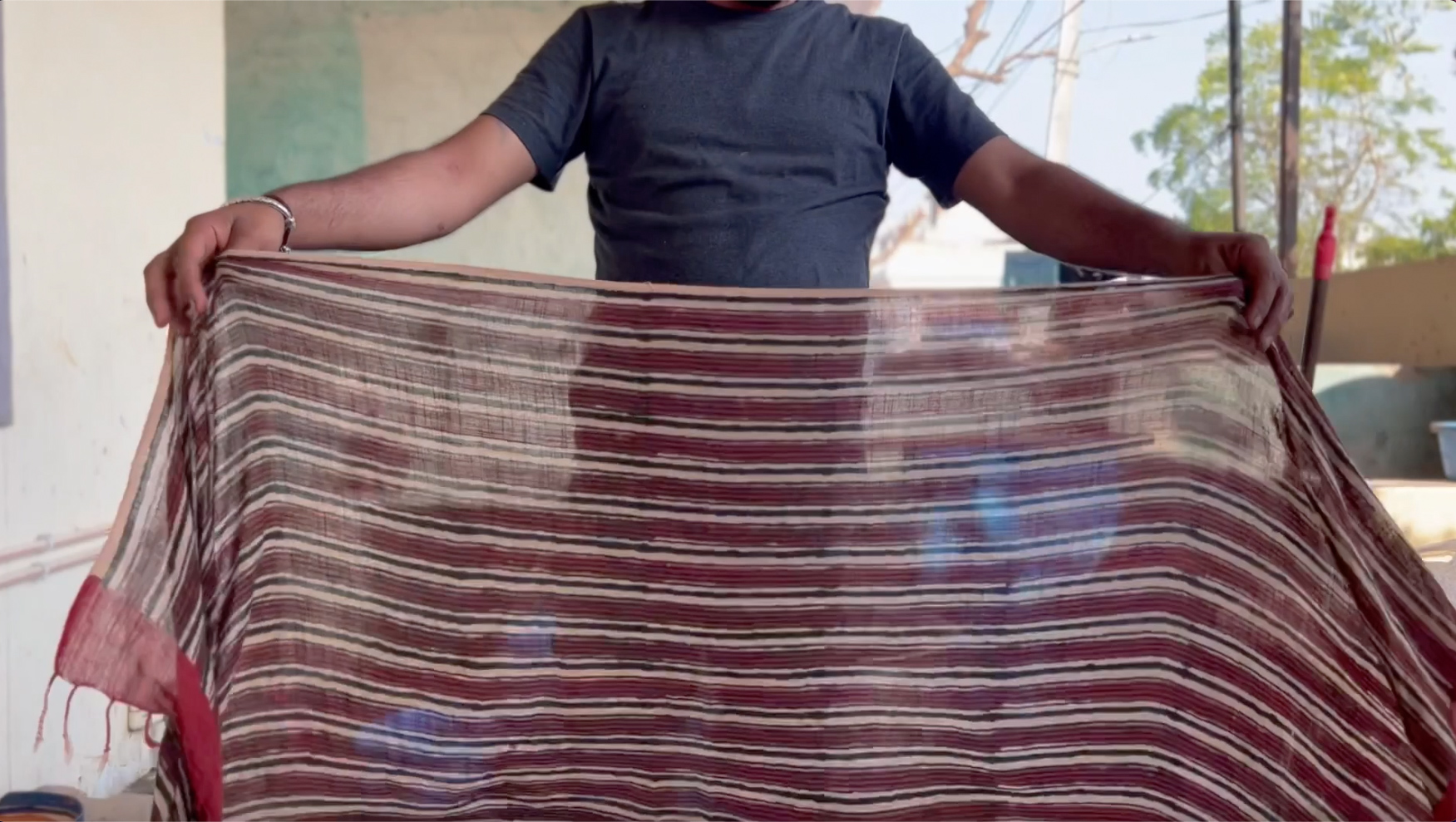
Final Wash Harda
The process end with a final wash in harda (Terminalia chebula powder) solution, again, to brighten up the colors and wash away from the cloth excessive alizarin (extracted from the roots of Rubia cordifolia tinctoria).
Three Sisters
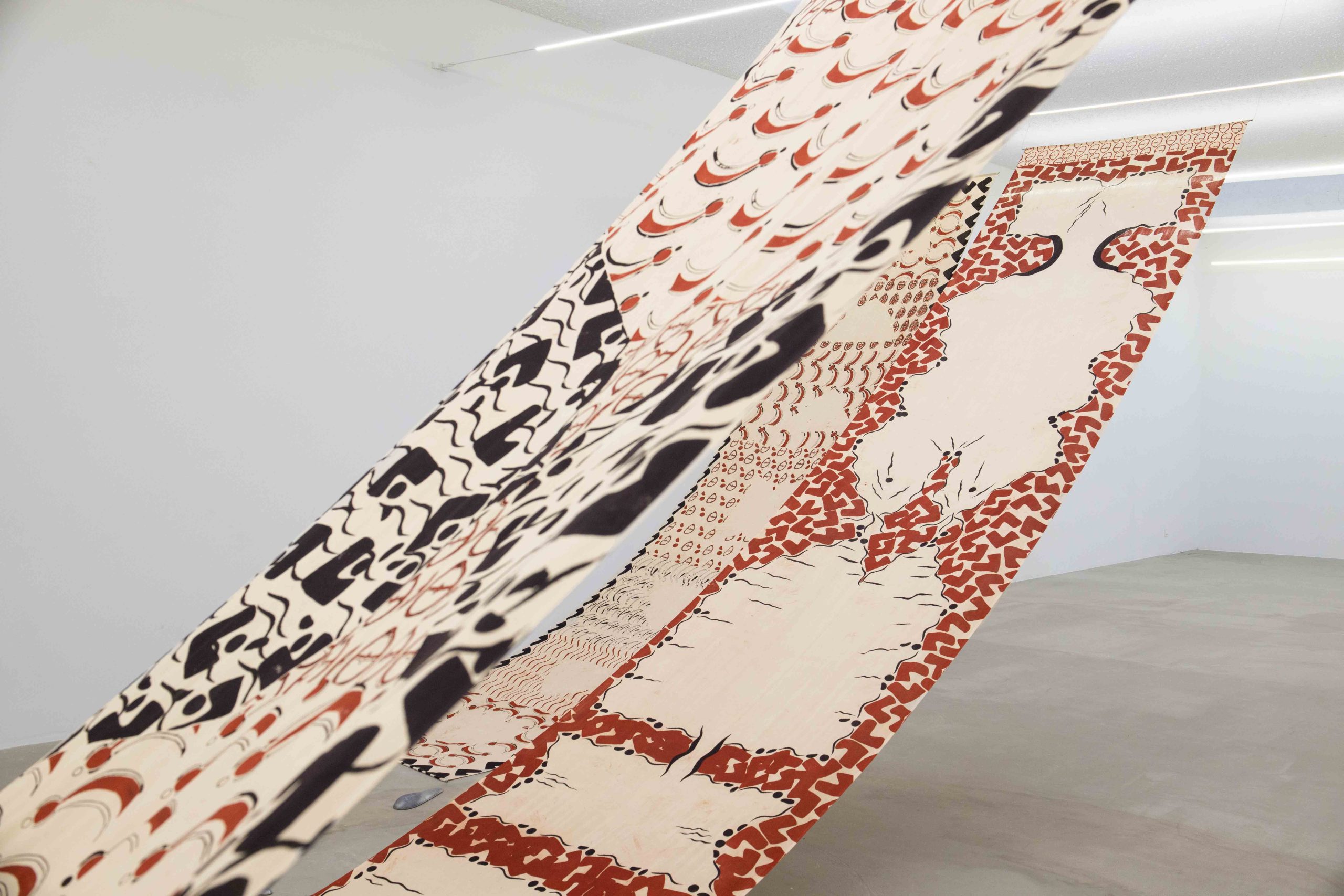
Sismógrafo, O’Porto
A Multiplicação dos Fingidos
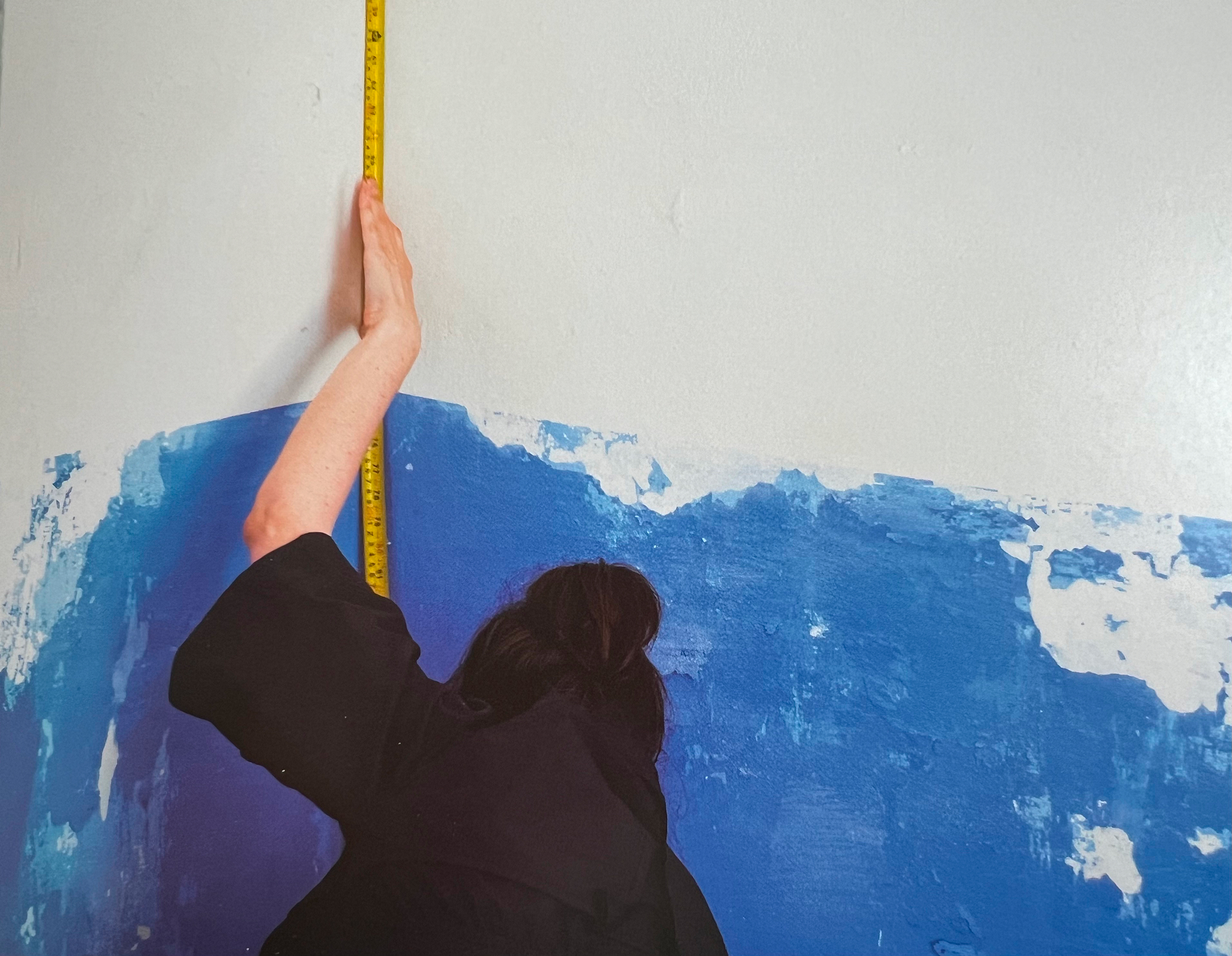
Land Art Cascais
The Sequel
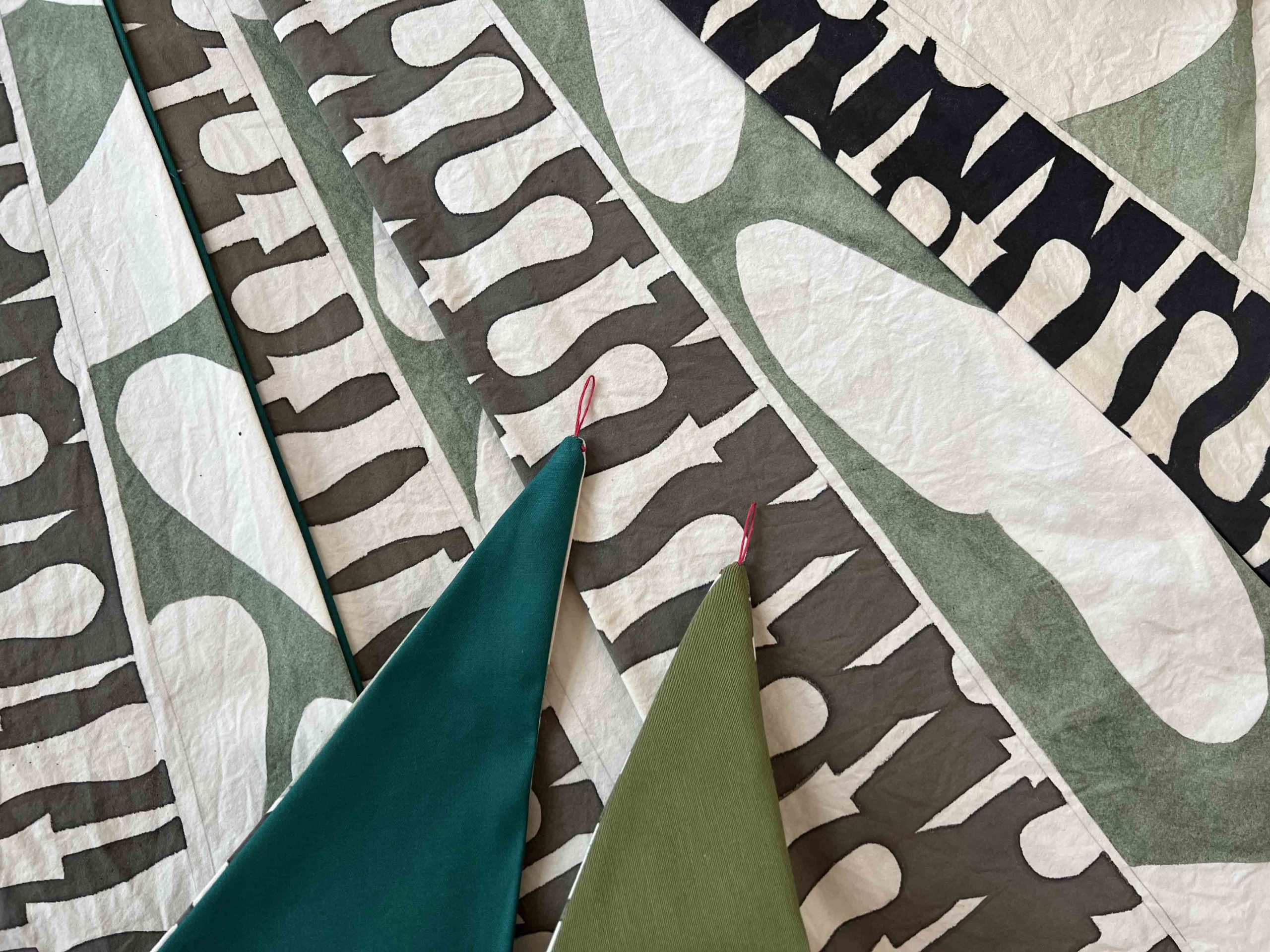
MNAC, Lisbon
Selva
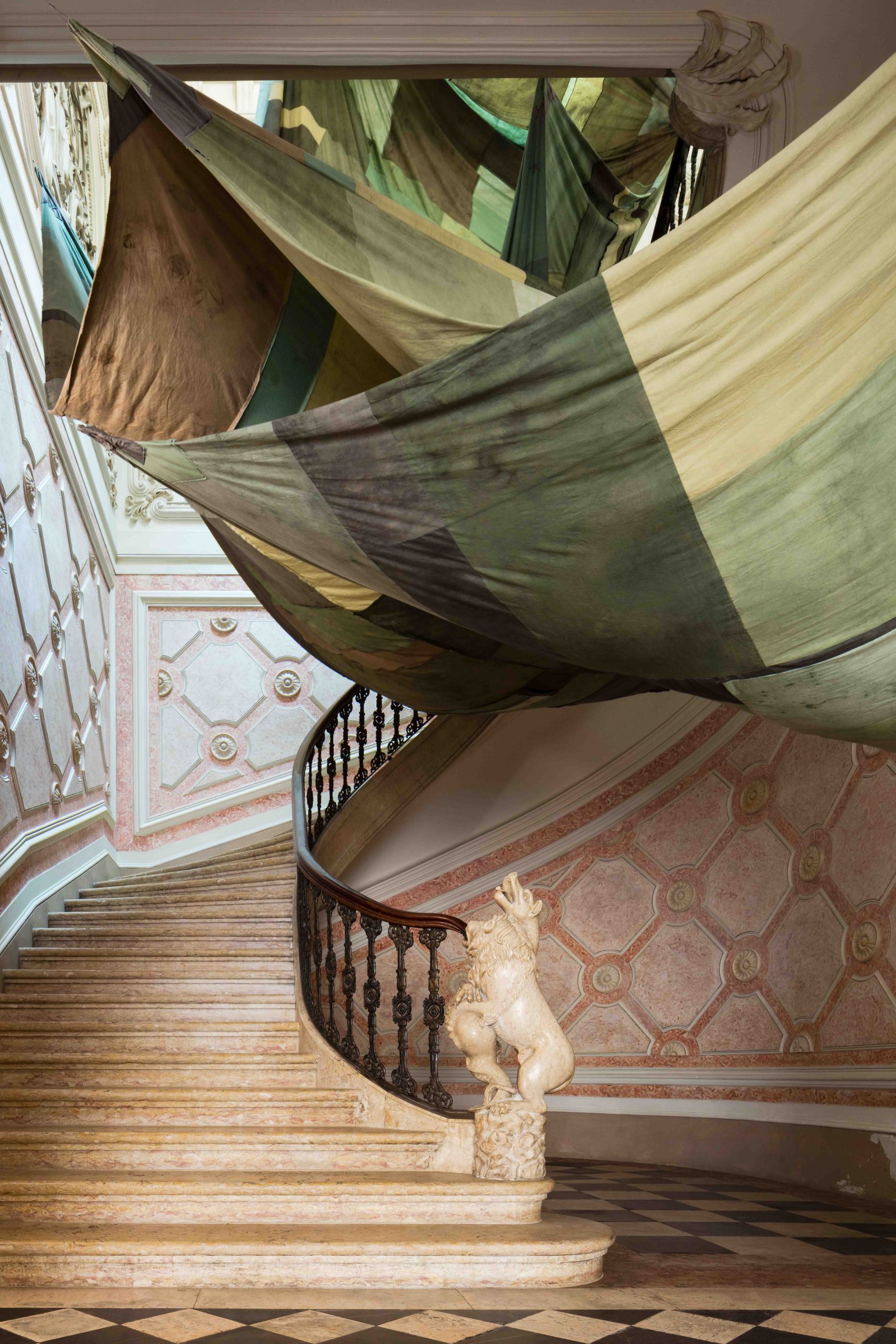
Brotéria, Lisbon
Ninguém. Só eu
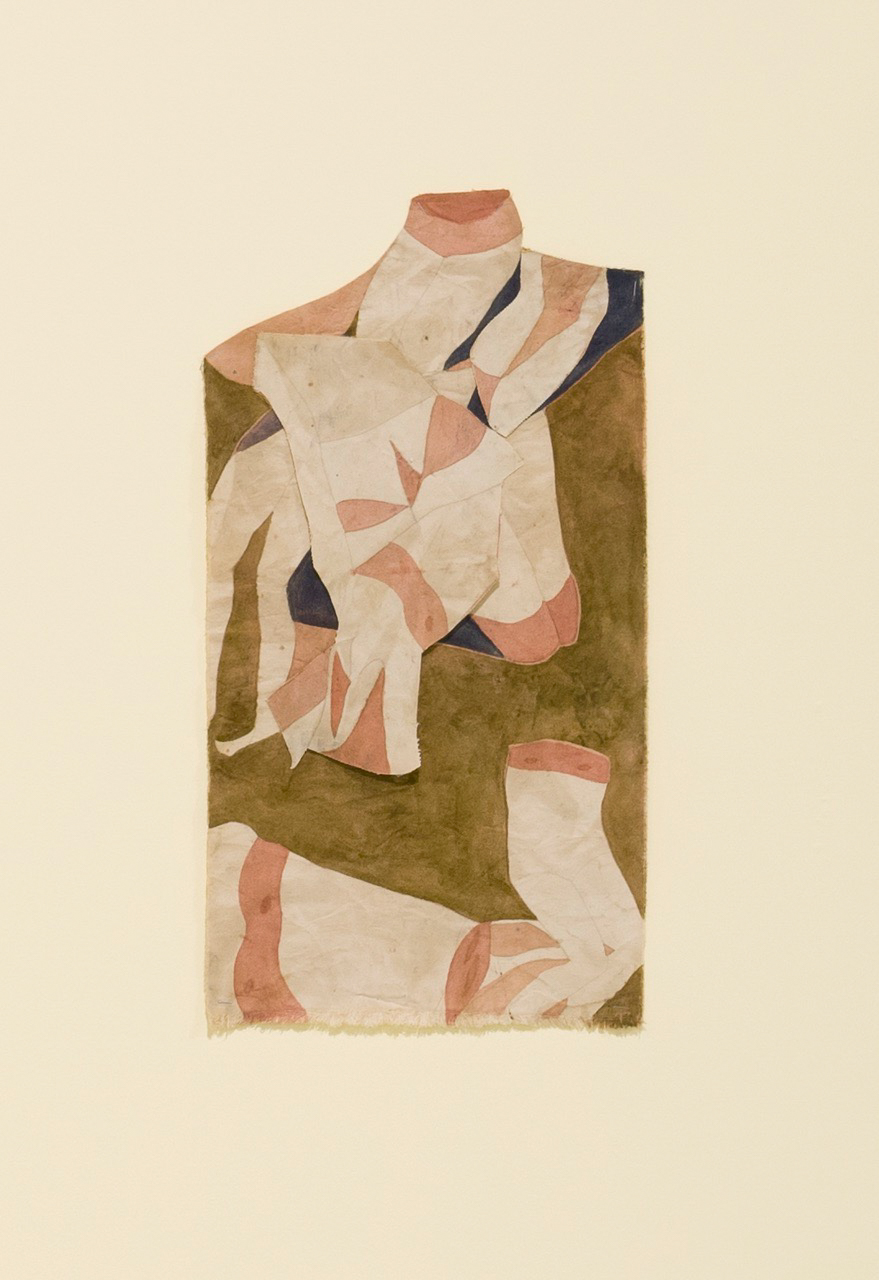
Centro de Arte Oliva, São João da Madeira
Plano de Contingência
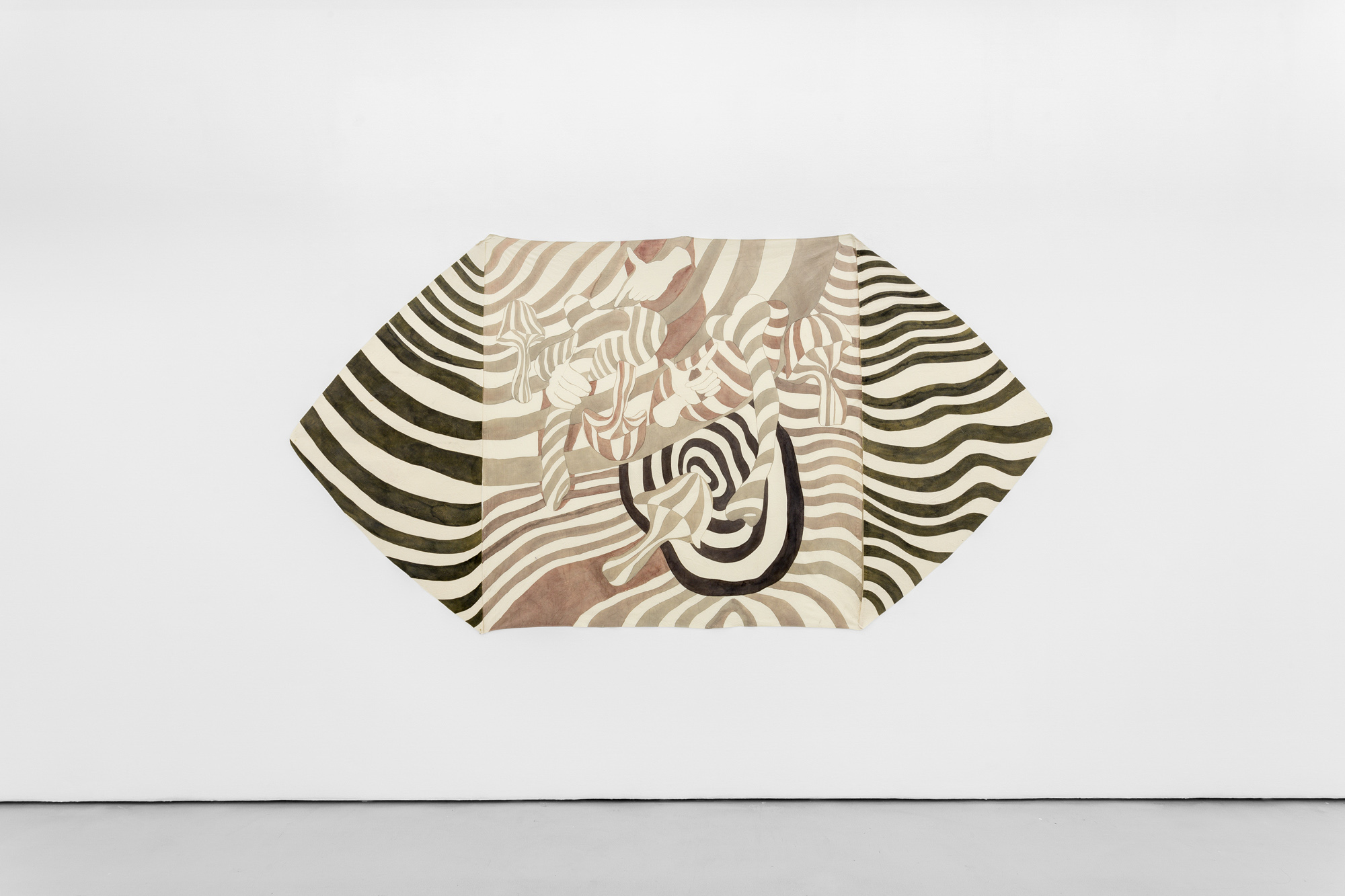
Cristina Guerra, Lisbon
Às Nonas, Midas nos Dedos Medram e Mondam
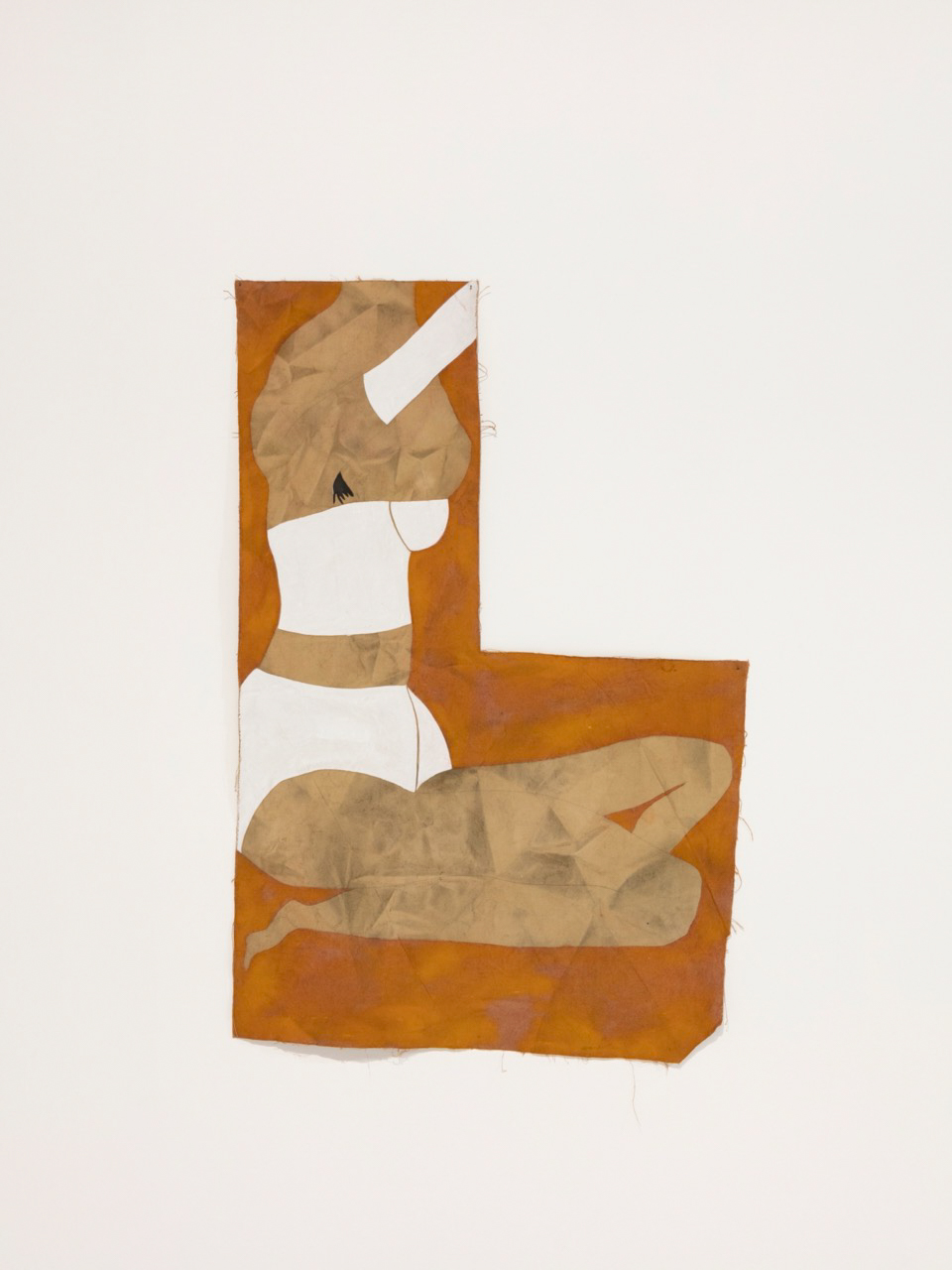
GALERIA DE ARTE DA CÂMARA MUNICIPAL DE ALMADA
Piquenique
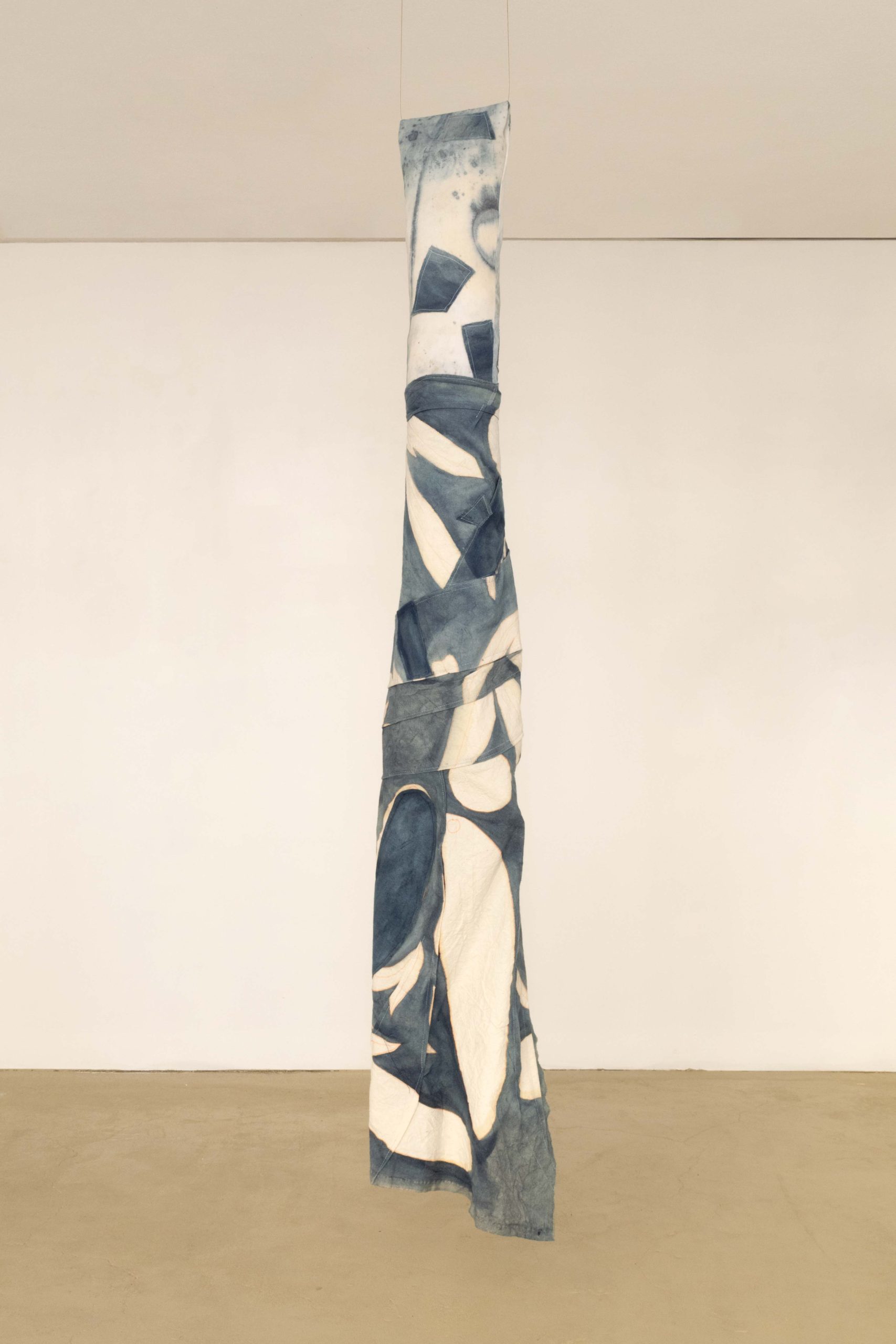
Verão, a project space run by Antonia Gaeta, Lisbon
Navigator
Chiado8, Lisbon